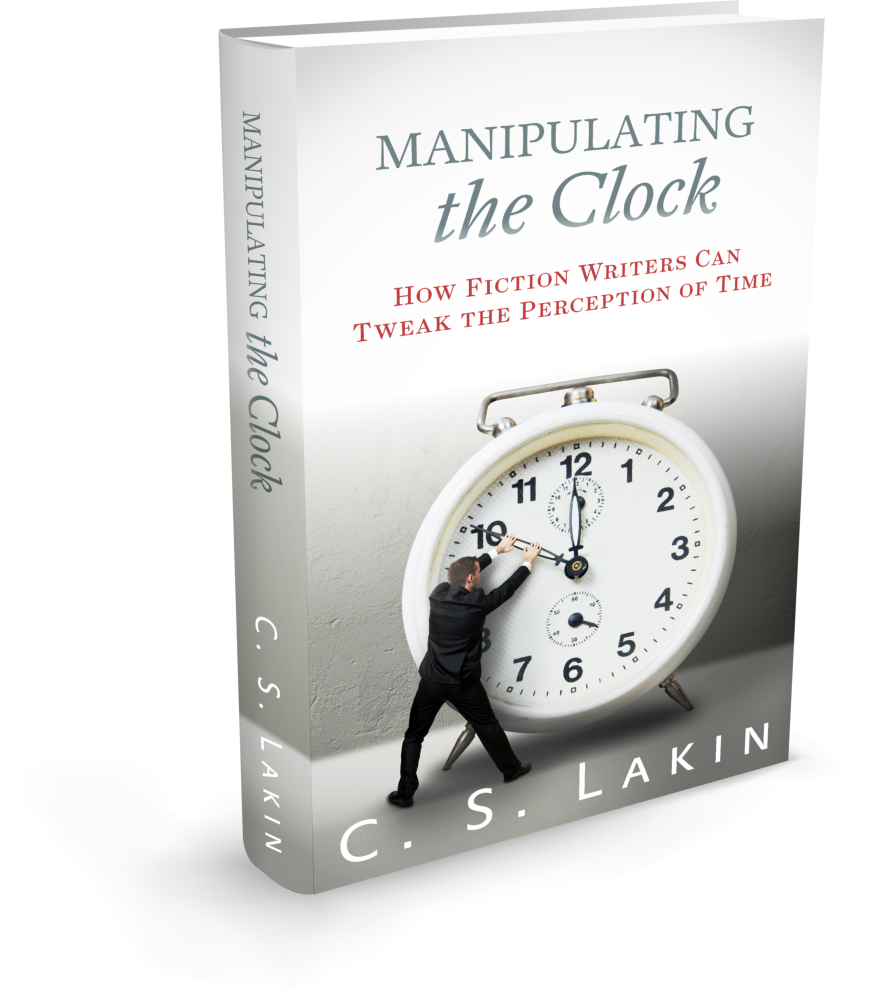
How Much Did Kindle Unlimited Pay per Page Read in April, 2016? (Good News)

Thanks to Chris McMullen for keeping us informed on many aspects of the publishing world, and particularly the financial side!

KINDLE UNLIMITED PAGES READ: MARCH, 2016 The Kindle Unlimited per-page rate improved nearly 4% up to $0.00495663 for April, 2016. (Compare this to $0.00477885 for March, 2016.) This is up 21% over …

Source: How Much Did Kindle Unlimited Pay per Page Read in April, 2016? (Good News)

Posted in Uncategorized | Leave a comment

The Latest Blog Post at JaneFriedman.com

Often, when I read other blog posts, I think -great, informative topic, so why re-invent the wheel? Jane Friedman’s blog is loaded with useful content, and from time to time I will share some of those with you. Here is a recent one.

How to Use Guest Blogging to Promote Your Book

By Beth Hayden on May 10, 2016 05:00 amby GotCredit | via Flickr

Today’s post is from online marketing expert Beth Hayden (@BethJHayden).

When you create a guest post, you write an article specifically for a site that is not your own. Over the past few years, guest blogging has become a powerful (and free) tool in many authors’ book promotion toolboxes.

Jane features a lot of high-quality guest posts on her site—check out these articles to see some recent examples. Jane’s guest bloggers get exposure to her passionate audience of motivated authors, and Jane gets high-quality content for her website that she doesn’t have to create herself. It’s a win/win situation for all parties involved.

This post discusses the benefits of guest blogging, and how to write top-notch guest posts for sites with a passionate, dedicated audience. We’ll also talk about the controversial side of guest blogging, why some authors shun it as a book promotion tactic, and why you shouldn’t turn your nose up at this powerful technique.

The Advantages of Guest Blogging for Authors

The benefits of guest blogging for building your platform and promoting your books can be enormous. Guest blogging can:

  • Enhance your reputation as an authority in your field. If you’re trying to get found online and establish yourself as an expert in your field, guest blogging is a great way to do it. When your prospective audience members see you on popular sites—and posting useful and entertaining content—it’s easy for them to view you as a reliable specialist in your niche.
  • Introduce you to targeted, passionate communities. As an author, your main job is to get your message out to the right people—the folks who are most likely to be interested in what you’re saying and ready to buy your book. When you publish a guest post on a popular site, a group of highly engaged community members will read your piece—and that can lead to significant increases in your subscriber numbers and sales.
  • Increase your sales numbers more directly, because a purchase is only one click away in a guest post. When you are featured in regular media outlets, a prospective book buyer often has to write down your name, then remember to go online, search for your information, and purchase your book. With a guest post, your book page on Amazon is only one click away—your prospective reader can purchase your book quickly and efficiently.
  • Help you stand out with influencers and popular bloggers by giving them something of value. Instead of begging influential bloggers for reviews, consider reaching out to them with guest post ideas. By offering popular bloggers a guest post, you’re giving them something valuable (high-quality content) instead of asking for a favor (asking them to review your book). You’re considerably more likely to get a positive response than if you’re just requesting their attention and time. Guest posting also helps you build long-term relationships with influencers, too—which can be helpful for future promotions!
  • Be a great list-building technique. If you need to build your list (and let’s face it—all authors do), guest blogging could be your new best friend. It’s a great tool for attracting new subscribers. Traditional publishers love to see authors who already have an established platform, and one of the major things they look at is the size of your mailing list. If a traditional book deal is what you want, using strategic guest blogging to build your list is a good idea.
  • Give your book launch a boost. Although guest blogging can be useful anytime, planning a guest posting campaign—also known as a virtual book tour—can help boost your sales during a book launch.

The Guest Blogging Process

Here are the steps you should take to find guest blogging opportunities and write effective guest posts:

1. Find and research potential targets

Look for popular blogs that take guest posts and have a dedicated, passionate audience.

It’s fine to target a blog outside your exact niche, as long as the blog has an audience similar to yours. For instance, it’s okay to target a personal finance blog if your audience hangs out there—even if you’re not promoting a personal finance book.

As you’re looking for sites to write for, try to estimate how much traffic a particular blog gets. Look at the average number of social shares and comments their posts receive—the higher the numbers, the more popular the site is. Focus on sites that have ten or more comments per article, or a high number of social shares on each post.

That said, remember that size isn’t everything. You’re looking for blogs that have a decent-sized audience, who have built trust with their community members. Use your best judgment and don’t rule out all smaller sites, especially if you’re just getting starting with guest blogging.

Next up, examine the site’s previous guest posts, and make sure guest bloggers are allowed to link to their Amazon book pages (or to their own blogs) in their bylines. If the site doesn’t allow you to include a strong call to action—to buy your book or download a free incentive on your site—you should remove that blog from your list of potential targets.

Remember, you are guest blogging for the link and the exposure, so if you can’t link back to your book or your site, writing a guest post for that site will likely be a waste of your time.

When you find a blog you’d like to write for, look for that blog’s guest post guidelines. If the site regularly features guest posts, they will probably have guidelines for writers in a “Write for This Site” or “Write for Me” section of the blog. These guidelines will often spell out exactly what kinds of posts they accept, where to submit topics or posts, and how to increase your chances of submission success.

2. Come up with a few topic ideas (or sample headlines)

Your next step is to come up with a few post ideas. Think of three to five topics you could write about for each blog on your target list.

Make sure the topics are a good fit for the site, and study the content on the blog carefully before you brainstorm ideas.

In your research, find out what previous posts have been popular on the site. Look for past posts with lots of social shares and comments, and consider pitching posts on similar topics.

Don’t pitch the exact same ideas as previous posts, though—especially if the topic has been covered extensively. Find fresh angles on old topics, or answer questions people asked in the comments section.

3. Make your pitch

Email the blogger or use the blog’s contact form to send your three to five proposed blog post topics. Follow the writer’s guidelines during this step, and make sure to submit your ideas using the method they’ve requested.

Tailor your pitch to that specific blog, and always include your topic suggestions—if you don’t, it’s likely your guest post request will go straight into the trash.

Spend time on your pitches, just as you would if you were writing to a journalist or media outlet. Don’t send mass template emails to hundreds of bloggers—craft each email personally, and add details and ideas that are specific to that blog.

4. Write a top-quality post

When your blog post idea gets accepted, craft a top-quality post. Don’t reuse content from your existing blog, and don’t cut corners. The post should be longform (1000+ words) unless otherwise specified by your host.

At the bottom of your post, write your author byline. The byline should be short (eighty words or less) and include a strong call to action. It’s preferable to link directly to your Amazon book page, as long as it makes sense with your blog post topic.

If you don’t want to send people to Amazon (or your book hasn’t been published yet), include a link to a simple landing page on your site where the reader can sign up for a free incentive and join your mailing list.

5. Answer post comments and help promote the piece

When your post is published, answer comments from readers, and help promote the piece by sharing the link on social media and sending it to your email list.

6. Follow up and keep going

If the post does well and brings in lots of book sales or subscribers, follow up and ask for another guest posting opportunity with that blogger. Develop ongoing relationships with high-traffic blogs and become a regular contributor, if possible.

The Biggest Concern About Guest Blogging

At this point, you might be thinking, “Why should I write for free on these sites? Shouldn’t I spend my time working on my ‘real’ writing, instead of writing all these articles and not getting paid?”

I get it. It’s frustrating.

However, as we’ve already discussed, the potential benefits of doing strategic guest posting on popular sites are huge. When you’re selective about where you post, and smart about how you gather leads from your posts, guest posting can often be more effective than any other book promotion tactic out there—and that includes major media attention!

Bottom line: Guest posting works. I look at it this way: I’m okay writing some pieces for free in exchange for higher search engine rankings, hundreds of subscribers, and tons of book sales. The benefits (as we talked about above) make guest blogging the right decision for me.

You have to decide what works for you, and whether you want to include guest blogging in your book promotion strategy—but for me, it’s a no-brainer. Guest blogging is an excellent way to get more subscribers, build your platform and get more book sales. When done strategically, regular guest posting can be your most powerful book promotion tool. So pick some sites, start brainstorming your post ideas, and get ready to go on an exciting ride.

Posted in Blogs, Book Sales, Books, Social Media, Writing | Tagged , , , , , , , , | Leave a comment

TIME FLIES…AGAIN!

Time FliesIs today really Wednesday? Because when I woke up yesterday, I could have sworn it was Monday, so today should be Tuesday, the day of each week when I post something new. Alas, the folks on three TV stations, the newspaper, and even my own computer are mocking me. It is, indeed, Tuesday. No, Wednesday. My brain refuses to accept it. But here I am, and here it is, a day late.

So, I’ve been sharing my journey toward the Holy Grail of traditional publishing. After 45 queries and a flurry of replies from agents (8 instant “no thank you’s”, one manuscript request), I took stock of my odds. Since the websites of many of the agents I queried stated they may not reply at all unless interested, the polite (if disappointing) negative responses were a pleasant surprise. At least I wasn’t hanging off the edge of a cliff. But 36 remain silent, and may remain that way.

So what next? Do I wait 3 months before taking any further action? Should I query additional agents? I had limited my original list to NYC and CA agents, but there are agents all across the country. I could do that. Maybe the agents in other geographic areas receive fewer queries? Maybe they are less apt to dismiss authors so quickly (or not respond at all, once they’ve discarded your query)?

Should I be more patient? It has, after all, been only two weeks. But I’ve never been one to sit back and wait.

So I decided to do a search of small publishers who accept un-agented submissions. There aren’t many, to begin with. And several of those that popped up had negative reports in Predators and Editors. Some published only digitally (what can I say, I’m old – I want a book I can hold in my hands.) And very few seem interested in women’s fiction that isn’t of the bodice-ripping type. My list of close to twenty quickly diminished to…drumroll…three: Kensington (a surprise), Red Adept, and an LDS (Latter Day Saints) publisher called Cedar Fort. Cedar Fort is not in QueryTracker, which made me suspicious, but has nothing negative in Predators and Editors. Their website is professional and informative. And they only consider pristine-clean women’s fiction (which mine mostly is).

I’m torn, and cautious. Since I knew positive things about Kensington, and in spite of the fact that they are very competitive, I dipped my toe into their waters. The biggest initial problem (as I see it) going direct to publishers is their wait times. Kensington’s website indicates a response of any kind likely will take several months, and “if you do not hear back on your query, it means that your project doesn’t fit our current editorial needs.”  So a writer could wait 4-6 months only to draw the conclusion that they aren’t interested. Kensington prefers (but doesn’t require) that you query them exclusively. Once I get past the wait time issue, there’s also the fact that without an agent, I’d have to find an attorney to review the contract and protect my intellectual property rights.

Sigh.

I’m still toying with submitting to Cedar Fort. Or amassing another list of agents, this one of agents not in NYC and CA. Or just waiting.

WHAT WOULD YOU DO?


Posted in Agents, Blogs, Books, Goals, Publishing, Women's Fiction, Writing | Tagged , , , , , , , , , | Leave a comment

What to Write Next?

So I finished Gram & Me, as I mentioned a few posts back. I packaged multiple queries to agents, and already my confidence is waning, even though it has only been a week. I should be ecstatic – although I received 3 instant rejections (indicating the story line wasn’t for them), I did receive a full manuscript request. I likely won’t hear more about that for weeks. But I’m floundering around trying to decide what to do next. I’m losing confidence in the likelihood of traditional publishing. Although I get lots of compliments on my writing, so far it hasn’t led to that Holy Grail. I’ve started another novel, and sharing Chapter One here. I could use some insights into how it could be stronger.

LILIES OF THE VALLEY

A Novel by Dawn Lajeunesse

CHAPTER ONE

June 1941

Everything changed the night Peter strode into my life. When he walked through the door, his eyes scanned the crowd as if he were looking for me, Katie Cuyler. As if. We had never met, didn’t know of the other’s existence. When he saw me, he stopped. Our eyes locked. Then, never taking his eyes off me, he headed my way. My heart raced and thudded, my stomach wrung itself, my legs turned to jelly, and I had to lean on the table to remain standing as I watched him approach.

He was tall enough, but not too, maybe five-ten. His hair was jet black and he had a rakish moustache, like Rhett Butler. He wore a casual, short sleeve, button-down shirt in some kind of print with the top few buttons open, allowing dark hair to peek through. As he reached the halfway point in the large, crowded room, I caught glimpses of the rest of him, trim and solid in lightweight tan summer slacks.

It was early summer, and The Pointe had just opened for the season. My friend Ruthie and I stood by a table near the bar where we’d have a good view of the action both there and in the dance hall. On such a warm evening, we both wore sundresses – mine a peach print that I thought warmed my skin tone and contrasted nicely with my light brown hair – and, of course, our dancing shoes. Christmas Weekend 2011 012

It took a split second for me to open my compact to check my lipstick, closing it in frustration that my lips weren’t full like Ruthie’s. I smoothed my dress and wished that I was more voluptuous, like Helen, instead of kind of short and puny.

Staggered rows of tables lined three sides of the room between the dance floor and the rough wood walls. The checkered linoleum floor may have been green and white at one time but had faded to speckled gray under years of seasonal wear. The smell of tomatoes, basil, oregano and cheese competed with beer and smoke. Spaghetti was tonight’s entrée. The Pointe had one food choice each night, and if that didn’t suit you, then you had to be satisfied with peanuts. Folks didn’t come to The Pointe for the food or the glamorous surroundings. Before long all the food would disappear and the real action, the dancing, would begin.

Ruthie followed my line of vision, and we watched this self-assured man make his way across the crowded room. He’d entered by the side door, the one marked “Ladies Entrance,” the one that brought him directly into the dance hall instead of through the dark bar. The hall was bright this early in the evening, sunlight still streaming through the abundant glass windows, making it easier to watch his approach. Several people stopped him, tried to engage him, but he grinned without looking at them, held up one finger – as if to say, “be back in a minute” – and continued toward Ruthie and me.

From the juke box Bing Crosby sang “The Folks Who Live on the Hill.” Lazy fans swirled the canopy of smoke that already hovered at the open raftered ceiling.

“Who is he, Tuffy?” Ruthie asked. Tuffy was my nickname dating back to early school grades. I got picked on a lot, because I was scrawny and had what many considered a low-life family. I fought back every time, drawing blood more than a few times. By sixth grade, nobody messed with me.

“I have no idea,” I said, my voice sounding far away, swallowed up by the noise of the crowded room.

“Classy outfit. Looks well-heeled,” Ruthie assessed. “He’s definitely not from Comstock Valley,” she declared, setting her beer on a cardboard coaster with a red “Ballantine Beer” label.

My legs, grown more wobbly as he approached, could no longer hold me, and I dropped into my chair.

When he reached our table, the din of voices around us receded, leaving the two of us alone in our own world. He grabbed a wooden chair, spun and straddled it in one motion and lowered himself to eye level with me.

Suddenly shy, I looked down. His hands rested on the back of the chair. They were the hands of a man who wasn’t afraid to work, calloused and strong, yet immaculately clean, nails evenly clipped. Then I returned my scrutiny to his face.

Green eyes held mine. It struck me as strange, these gentle green eyes in the face of a man who otherwise looked so strong and confident.

“I prepared a very clever opening line on my way over.” His voice was deep and soft. “But now I can’t remember it.”

I smiled at him, wondering if that was his prepared line. My fluttery stomach and racing heart wanted to believe him.

“Then say something else,” I replied in my best Garbo voice.

“What I want to say will surely sound like a line.” His voice had lowered. The conversation felt more intimate. It was only him and me.

“Try it,” I barely whispered.

“I’ve been waiting all my life to find you.” Before I could react he slapped the back of his chair, adding, “Shoot, even I think that sounds like a line. Can we just ignore this awkwardness, and I’ll take you over to the box, we’ll pick out a tune and dance past it?” He reached his hand out for mine.

I glanced over at Ruthie.

“Scram,” she said, nodding and shooing me away with a flick of her hand. “The gang will be here soon.”

“I’ll be back after one dance,” I told her. I didn’t want this guy to think I didn’t have a mind of my own.

But one dance led to another. Peter led smoothly and instinctively as we swung to Glenn Miller’s “Chattanooga Choo Choo.” Unlike a lot of men, he didn’t seem to think about the movements. His eyes were on mine. In a way, it was a bit unnerving. I didn’t know anything about him, but I felt like he was reading my soul. Our palms brushed lightly unless he was readying for a dip or a turn, when he pressed my palm or grasped my hand with a light tug and a subtle movement of his head to communicate the next step. When “Choo Choo” ended, I pulled back, nodded thanks, and turned toward my table.

“Please stay,” he said softly, holding on to my hand. “One more?”

dancers-twotone-300px

Someone else liked Glenn Miller – of course, who didn’t? The beginning of “Blueberry Hill” played and I debated. My friends were waiting. We usually all danced together. But those green eyes pleaded, and a warm thrill coursed up my arm when he squeezed my hand lightly. I gave what I hoped was a nonchalant shrug, but couldn’t help smiling as I flowed back into his arms. It was a slower pace than the first dance, which allowed a little conversation.

“What’s your name?” I asked, just before a quick turn under his arm.

“Peter,” he answered. “Peter McCaid.”

“What is that? Scottish, Irish?” Step, step, half turn, back together.

“I regret to inform you that I am an all-American mongrel. A mix of English, Scottish, black Irish, and Norwegian. I’m told there’s even a little Spanish and Italian in there. And who knows what else? Your turn.” Full turn, dip, step, rock, step.

I laughed at the description of his genealogy.

“Katherine Cuyler.” Step back, step forward. “My friends call me Katie.”

“It fits,” he said, twirling me into his embrace and just as quickly out to full arm stretch. “Katie’s a happy-sounding name, and the way your eyes shine, I’d say you’re a happy girl. A girl who enjoys life. Katherine is so formal sounding. What kind of name is Cuyler?”

“No more specific than McCaid,” I admitted. Step, rock, step. “My grandparents told me I’m a mix of Dutch, German and Scot.”

“Your grandparents?” His surprised inquiry was cut off when the number ended. “Please, Katie, one more.”

“I told my girlfriend I’d be back after one,” I said with a nervous laugh, peering through the crowd. It looked like someone was at the table with Ruthie. I couldn’t be sure who.

“I promise,” he swore, right hand moving in an oath. “Cross my heart and hope to die. One more dance and I’ll escort you back to your table.

For a second I thought the decision would be taken out of my hands, because another song hadn’t started. But then “Frenesi” began, with its Spanish-sounding tune, although Artie Shaw sang in English.

“Didn’t I just tell you I had some Spanish in me? We have to dance this one.” He laughed as his own silliness.

But I found myself following his lead once again.

After “Frenesi,” as promised, Peter led me back to the table. The gang was there.

“Everybody, this is Peter. Peter, that’s Ruthie, and Laura, and Tracy. John, not to be confused with Johnny here, my brother. Over there’s Shrimp.” Shrimp was six feet tall and built like a beanpole. “Peter’s a great dancer,” I exclaimed. “I felt like we’d been practicing together forever. Didn’t matter if we were jitterbugging or fox trotting.”

“We fit together well and seem to think alike on the dance floor,” Peter said. “Next time we’ll waltz.” He slid his arm around my waist, our eyes met, and my legs went all rubbery again.

I told myself to play a little harder to get. But it was hopeless. After Peter came along, I knew nothing would ever be the same again.

************

So, readers of my blog – what do you think?

Posted in Dancing, Manuscripts, Uncategorized, Women's Fiction, Writing | Tagged , , , , , | Leave a comment

WRITING WHILE WALKING…

I always knew my mind worked differently when I was walking or hiking. Here, Jane Friedman confirms my experience and reminds me why I should be prepared to capture some of the creative thoughts I have on the move…

Why Writers Should Consider the Habits of the Flâneur

Foggy Trees

Posted in Blogs, Writing | Tagged , , , , | 2 Comments

In Search of The Right Agent

Ah, the long and winding road to agent representation. And people think running for President is tough?

AC_chosen1  Shoes - reduced

A little background: my first two novels Autumn Colors and In Her Mother’s Shoes, were self-published because of my inability/failure to secure an agent, the gatekeepers of traditional publishing. I made a lot of mistakes with those first two, and as a result wallpapered my office with rejections (back when all agents replied, even if it was just that curt “not for me”- maybe the not responding is kinder, since it’s not so in your face). In those agent searches, I didn’t really search and study. I just sent letters to everybody. Big mistake #1. I didn’t target agents whose clients and websites indicated interest in the kind of novels I write (women’s fiction).

So, as I neared the end of Gram & Me, I began to put a more sophisticated search process into action.Books on shelves

First, I studied the “experts” perspectives on what makes a good query. There are many resources out there, from webinars to blogs to articles on agent websites, and more. Once you start looking for them, you might well be buried by the volume out there.

Meanwhile, I heeded the experts’ advice on importance of developing a professional website, maintaining a branded blog, and becoming more active on social media. It’s been a tremendous learning curve, and I’m still not savvy, but I’m getting there and ever-aspiring!

Second, I lined up early readers. These were carefully selected individuals who were avid readers and not afraid to tell me the truth. It was eye-opening in a thoroughly useful way, if sometimes painful.

I also sent the completed manuscript off to a professional editor. I have had Gram & Me reviewed and critiqued numerous times throughout its writing–by writing instructors, writing groups, and experts in the area of what makes a novel work. It sometimes was hard to swallow what they told me, but I “did it my way” with previous novels and look where it got me! This final edit, hopefully, will result in a polished version that holds together and flows smoothly.

Once the manuscript was complete, I knew it would be about a month before the edits would be sent back to me. So I began the long and time-consuming process of identifying the agents. Then I studied them: their websites, their blogs, their tweets, their wish lists, their clients and their recent sales. I compared what appeared in different sources: Writers Market, Query Tracker, Publishers Marketplace (yes, I sprung for a subscription-ouch$$$). And I paid attention to what they want in their queries. I paid attention to nuances in what I learned so I could incorporate whatever might tip the scales in my query-you have to get past the query before the actual manuscript might be read. I spent-no exaggeration-8+ hours daily for the last two weeks, studying and practicing query options as if I were studying for the Bar exam. And I’m not done.

Over the past four days, I began incorporating everything I learned into queries targeting the agents who ended up on my “final” list. I had started with over 1000, easily peeled away over 500, and then focused on what features and characteristics would be best matches. To the extent possible, I included what I could identify as personality traits that would be a good fit for my own traits, positive and negative. I pared the “A” list down to 40 agents, 38 women, 2 men. (There aren’t a lot of male agents who list “women’s fiction” in their wish lists.) If, after all my studying, this doesn’t yield success, I’ll begin the same process for my “B” list.

I spent almost one entire day individualizing content and format of any information allowed either as embedded in the query email or as (rare) attachments. One job that took nearly an hour, thanks to my very pokey printer/scanner and a learning curve, was turning a Word document into a PDF for the one agent who preferred that. Note, her site said it was “preferred” not mandatory. But there was no way I was not aiming for perfection!

As of when I put that process on hold for today’s activities (preparing this post, voting in the NY primary, a stop at Starbucks, and an overdue visit to the gym), I was up to the S’s on my list-six more to go. Along the way, I’ve created no fewer than 35 distinct versions of my baseline query letter and created packages targeting what each agent says they want in a query-no more, no less. I’ve created files for each agent so far, with the query package ready to go.  I expect to complete the final six after today’s journey to the outside world. Then I wait-I don’t dare send off the queries before I have the final edits on my manuscript, just in case someone is blown away enough by my query to request the manuscript immediately–I can dream, can’t I :-)? I expect to receive that within two weeks.

Meanwhile, I’ll maintain a positive attitude, knowing I’ve done everything I can do to make my novel and me, as an author, appeal to my chosen agents. When all systems are “go”, I will look forward to clicking “send”.

And then sit back and wait. Well, not exactly. Because I’ve already begun work on Lilies of the Valley, my next novel. What can I say? Writing is in my blood, whether or not traditional publishing is in my future.

Books and Quill


Posted in Agents, Autumn Colors, Blogs, Books, Dreams, Editing, In Her Mother's Shoes, Manuscripts, Publishing, Social Media, Uncategorized, Women's Fiction, Writing | Tagged , , , , , , , , , , , , , | Leave a comment

LEARNING OPPORTUNITIES FROM C.S.LAKIN

Susanne Lakin has posted updates on learning opportunities for writers:

Come join me in my FREE webinar
and get a cool new ebook!

I’m going to confess something to you. I’m seriously nervous about putting on my very first webinar on APRIL 25. Although I teach workshops around the US, the thought of dealing with tech always makes my palms sweaty.

Have you ever attended webinars that suffer from tech failure? Halfway through the sound goes out? Or the video jams or the webinar crashes?

I participated in a whole lot of webinars in the last year, and about a third of them suffered some sort of tech blip. That’s why I’m a bit nervous. Tech and I have issues.

But I plan to plow through.

Because I have a lot of great stuff to share with you and other writers.

Since I launched my new online course Targeting Genre for Big Sales, I’ve been getting wonderful comments from students.

Here’s one I got just this week:

“Sales and Reviews working in harmony! It’s a beautiful thing. Susanne, I’m so excited I wanted to share with you and my fellow students. The most important thing I’ve learned? Susanne is the bomb! Thank you from the bottom of my heart for sharing your wonderful knowledge with us. I’m going to keep plugging away, and as soon as I hit below 100 in a category, I’m going to be adding “Best Selling Author” to my bio. Can’t wait. Just knowing this can be accomplished feels like a huge weight lifted, and is giving me the drive to keep chugging. THANK YOU – THANK YOU – THANK YOU!”
—Debbie L. Moore, author of Flip This Ghost and the Pure Faith series

It’s very exciting to me to hear that authors are finally seeing the sales results they long for. And some of these authors are making only minor adjustments to their novels and Amazon product pages.

I’ll say this again: all the author platform in the world will get you nowhere if you don’t know how to target genre and target Amazon in a smart way. You can write a terrific book and never, ever sell more than a handful of copies if you don’t know how to optimize for big sales.
This one-hour webinar will cover these four key points:

1. Understanding what genre is and how Amazon interprets your book’s genre

2. How to find a niche genre that has high demand but manageable competition

3. How to deconstruct books in your genre to know how to write to fit in and sell well

4. How to optimize your Amazon product page for discoverability.

Learning the strategies of these four key aspects of targeting genre will give writers the best chance at discoverability and big sales.

Don’t waste years trying to figure out the secret to discoverability.

Join in the webinar and learn how to apply these strategies today!

If you come join in the webinar, you’ll get a time-limited awesome discount on my targeting genre course AND I’ll send you my upcoming new cool ebook (it’s a special release I’m working on, just for my list!)

WEBINAR DETAILS:

Date: Monday, April 25, 2016
Time: 3pm PT | 4pm MT | 5pm CT | 6pm ET

Hosted by my friend author Beth Barany at the Writer’s Fun Zone.

Space is limited to 50 spots, so sign up early, and show up early.

SIGN UP HERE! IT’S FREE! (And if the tech goes wonky, we’ll all have a good laugh.)


Just a few other reminders:

There is still room for you at one of my terrific South Lake Tahoe retreats, but act fast!

You will be spoiled by great food and fellowship, personalized instruction on novel writing, and a gorgeous house with hot tub and lake view. Seriously, this is my kind of vacation!

The Sept. retreat includes instructor and prolific fantasy author and editor Rachel Starr Thomson, coming from Canada.

The Oct. retreat has award-winning women’s fiction author and writing coach Ginny Yttrup helping teach.

Dates are Sept. 14-18 and Oct. 19-23

For more info, check out the flyer HERE.


If you missed the email about mega-author James Patterson’s terrific online course, be sure to check it out.

It’s a fun, comprehensive course with videos and handouts. I’m having fun going through the course myself!

It’s only $90! Here’s the link to enroll via the Masterclass site.

To learn more, read my post on Live Write Thrive that tells you all the cool details!

So, I hope you take advantage of all these great ways you can see success as a writer in 2016. And don’t forget to join me on April 25th in my webinar. I will answer your questions!

Thanks for all your support!

~ C. S. Lakin

Posted in Uncategorized | 1 Comment

Kindle Unlimited Pages Read: March, 2016

If these numbers don’t entice you to consider Kindle Unlimited, I don’t know what will! (Another winning post from Chris McMullen)

KINDLE UNLIMITED PAGES READ: MARCH, 2016 The Kindle Unlimited per-page rate held steady at $0.00477885 for March, 2016. It’s nearly identical to the $0.00479 for February, 2016. Both February…

Source: Kindle Unlimited Pages Read: March, 2016

Posted in Uncategorized | Leave a comment

The Key Book Publishing Paths: 2016

I have been following Jane Friedman’s blog for some time now, and have utilized many of her resources. Since 2013 she has been providing the latest must-know information about publishing options, updating annually. Yesterday she added 2016 to her series:

https://janefriedman.com/key-book-publishing-path/

The post is downloadable as a PDF file, so can serve as an easily accessed resource for anyone at or close to needing to make decisions about directions for publishing your work. Hope you find it as useful as I did!

Posted in Blogs, Books, Manuscripts, Publishing, Self Publishing, Writing | Tagged , , , , , | Leave a comment

CAN YOU DO TOO MANY REWRITES?

When you finish a manuscript, the hard work is just beginning.

vintage books with cup of coffee,magnifying glass, free copy space

I wrote last week about my experience with coming full circle with critiques and rewrites of my opening pages of Gram & Me. Three critiques, three resulting re-writes, and then a fourth tipped the scale to send me back to the original opening (or at least, a variation of that).

I also wrote about my passionate pursuit of an agent and traditional publication. The best opening pages might result in a request for the full manuscript. But the full manuscript has to “wow” an agent just as much as the opening pages. So, while I’ve achieved a reasonable comfort level with my opening (given the four critiques with only two in agreement—plus my own gut), there remain 250 pages that have been edited but not critiqued in depth.

The manuscript is back in the hands of one editor (for “proper” writing) and two early readers (on whom I am depending for honest feedback on flow, holding power, level of emotion evoked, fullness of characterization). Meanwhile, I’ve reread the entire manuscript twice in the past two weeks, and have continued to tweak both sentences and entire scenes. I’m a woman obsessed!

After the first re-read, I felt the crisis that turns the corner in the story fell short of the “kapow” needed to bring the reader to a peak before a satisfying resolution and ending. I had three ideas that I’d considered earlier in the writing process that I hadn’t used. I went back to them and settled on one (my use of the term “settled” says a lot), and dove back into rewrites to incorporate that crisis. Once again, I reread the entire manuscript to determine where I needed to lay the groundwork to build to the crisis scene. And I kept getting this internal resistance to changing the final crisis. The question I needed to answer for myself was: am I resisting it because it doesn’t add to the story or because it is a phenomenal amount of work to insert it smoothly? I read through to the end and declared the “crisis” scene that already existed to be adequate.

Adequate? Adequate doesn’t cut it in the ultra-competitive world of agent representation and publishing. I started justifying my determination by telling myself a more dramatic crisis would seem artificial, contrived.

Earth to Dawn! Is there a single novel out there that doesn’t have multiple scenes so dramatic that they seem unlikely in anyone’s real life? No, not in any of the really good books I’ve read in the past five years.

So has a sort of lazy inertia moved in to cripple my chances at that ultimate dream? Or is my gut—the part of me telling myself that my book is more “real” as is—correct?

How many rewrites are too many? When should the writer, especially one aspiring to the “Holy Grail” of traditional publishing by a major publisher, stop trying to push the novel up a notch, to the next peak, to the highest it can go before falling off the edge?

My answer after “talking” to all of you like this? NOT YET.

Notepad


BACK TO WORK!

What would you do?

Posted in Blogs, Book Reviews, Book Sales, Books, Editing, Manuscripts, Publishing, Women's Fiction, Writing | Tagged , , , , , , , , , | 2 Comments