
Interesting look at the industry…
https://www.janefriedman.com/2017-book-publishing-headlines/
Interesting look at the industry…
https://www.janefriedman.com/2017-book-publishing-headlines/
Excellent discussion of the workings, pros and cons of Goodreads giveaways…
via Goodreads Giveaways: Important Changes Effective January 9, 2018

It’s the bane of every writer’s existence.
It’s not the same as writer’s block, which I’m not convinced even exists. Or, at the least, writer’s block could be a consequence of literary lethargy. Or maybe, like Autism, literary lethargy is on a spectrum, the most extreme of which is true writer’s block.
It doesn’t lend itself to a simple definition or cause. Rather, it flows from a number of other circumstances, one or more of which lead to literary lethargy.
What are some of those other circumstances?
So, what to do?
Take stock of your goals. Assume financial and public writing success is a nano-reality. What are your current work(s) in progress? Can you derive joy simply from following the characters through their development through to the story climax? Are you excited by the anticipation of where you will take your characters by the end of the story? Then by all means, you will find the motivation to reach that goal, even if it takes longer than it would if you had a guarantee of a book deal upon completion. Once that work is completed, take stock of your goals again – is it worth starting another story/novel/memoir just for the sake of the creative process? If it is, than by all means have at it. If you are young and have years ahead of you to make your literary mark, who knows? Maybe the industry will change. Or maybe enough other writers will succumb to literary lethargy to throw in the towel, increasing your odds. But for “mature” writers like me, you really need to look at your life through a critical lens. Who and what are you neglecting in favor of obsessively carving out goal-directed writing time? Spouse? Grandchildren? Pets? Friends? Beloved people and pets aren’t with you forever.
I will finish my current work. And if, by some wild chance, this one falls in that tiny fraction of successes, my next step may be revised. But for now, I expect that my next step will be a sharper focus on loved ones and the bucket list of things we always said we’d do together when we had the time.

…when you’re both working on a story AND having fun!
In the past 6-8 weeks I have written a little over 10,000 words on my novel (working title: The Eyes Have It), enjoyed two brief vacations, put the final touches on plans for a high school reunion (coordinated with other committee members), AND planned an upcoming two week vacation, along with what seemed like daily social events, medical/dental appointments, and assisting a friend going through radiation and chemotherapy for lung cancer.
So I hope you’ll give me a pass for not posting here!
All in all, I’m happy with the last two months. Progress on Eyes is moving along nicely. If professional feedback is any indication it is by far my best novel yet, and quite different from the first three, since it doesn’t target a primarily female readership. I’m months away from completion, but it is moving along.
Reviews of the reunion, which occurred over Columbus Day weekend, have been glowing. We can thank the superb work of a dedicated and determined planning committee:


enthusiasm of attendees, an incredible DJ (along with his photo booth and props), beautiful fall weather, and hospitable venues! While most people are understandably nervous about seeing people they may not have seen for fifty years, somehow all the years washed away as memories of good times past flooded in. I highly recommend the experience.
Now and for the next week, I have a saner schedule. As our two week vacation approaches, I hope to focus on writing, both my novel and here, and other writing-related activities.
Sometimes you just have to ride out the uncontrollable busy periods and not sweat what isn’t getting done! See you again soon!

Continuing from my previous post, REVISITING THE AUTHOR MOUNTAIN CLIMB, let’s assume you’re not one of the lucky few who gets swept up into the arms of an effective agent and generous publisher. You’ve been sending your queries and the occasional manuscript out to every agency or publishing house (those few that accept submissions from writers without agents that even skirts the fringes of your type of novel, and you’ve run out of options.
Is it time to look at options for self-publishing?
The world of self-publishing options is broader and more sophisticated than it was even ten years ago. What are some of the advantages of paying to have your book published or formatting and uploading it to Amazon yourself?
First, there is the total control over how it’s done. Your choice of hardcover or soft. Your decision about page size and font size (although it may cost a bit more). No one tells you to cut the word count, and no one edits out that humorous scene in chapter five that made you chuckle as you wrote it. In fact, no one tells you what stays and what goes or what must be rewritten in another way.
Second, unlike traditional publishers, the turnaround time from submission of your manuscript to holding your book in your hand or seeing it listed on Amazon is measured in weeks or months rather than a year or more.
Third, you can control your costs by choosing a print on demand publisher, or keeping the initial run small until you’re able to generate some demand. Or you can go strictly e-book and keep your costs way down.
Of course, then there are the down sides of self-publishing.
When you have a traditional publisher, your book will go through multiple rounds of editing. As mentioned previously, this can be a negative if you really don’t want to let go of some of what you’ve written. However, the truth ( admittedly painful) is that professional editors do know what flows well, what really contributes to moving the story forward, and what content helps or hurts a book’s marketability. No matter how precise your grammar is, or how many friends you had read your book to pick up on inconsistencies or other problems, a professional editor will make recommendations that will make a better book. I’ve posted multiple times about the critical importance of thorough editing to the credibility of your book.
One round of edits isn’t enough to find all the potential issues. When my book, Autumn Colors, was going through the third round of edits, my attitude was “what could possibly be left?” And yet, we not only found misspellings and grammatical issues then, but again on the following two reviews. And when the book was published, I found three more. There’s no denying the value of careful and multiple edits. This is not done with self-publishing. Some self-publishers will say they do copy-editing, which is usually no more than the same grammar and spell checks you can do with your own word processing program.
The editing process also picks up on licensing issues (like if you quote the words of a song or poem) and may identify questions of accuracy. During one of the edits of Autumn Colors, my editor questioned a reference I had made to the drinking age in New York State in the mid-seventies. I lived it, so I knew I was okay, but I had to research when NYS raised the legal age for drinking to reassure her that the reference was accurate.
Another (big) downside of self-publishing is the credibility with which the book is viewed. Lots of excellent writers have their work rejected by traditional publishers. Chances are, if they self-published and were meticulous about their own editing, their book could be as good as many that are on the market. But it will not be viewed that way. Self-published books, novels in particular, have an uphill battle in the marketplace. While almost anyone can get their book on Amazon, getting into brick and mortar bookstores (often a dream for new writers) is next to impossible unless you are already famous or a highly acclaimed expert in the subject of the book. Even then, the chains look for endorsements by famous individuals and reviews by the likes of Publishers Weekly or Kirkus. Without those, you have little chance of getting your book out in the mainstream.
And the double whammy – it’s almost impossible for a self-published author to get reviews by any of the top reviewers – although some (like Kirkus) now have programs for self-published authors to pay (handsomely) for reviews. Some reviewers say up front that they don’t review self-published books. Others don’t say that, but ignore your book when you send it to them. Autumn Colors originally came from a traditional publisher, but the publisher didn’t assist with getting reviews. So even though my novel was published traditionally, it didn’t appear that way when I (paid for and) sent over 400 copies out to reviewers, newspapers, magazines and celebrities (authors and actors). At the publisher’s recommendation, I used a marketing entity (a dba of my own) to send them. But given they did not go out directly from the publisher, they had the appearance of being self-published. The recipients are deluged regularly with such books and simply don’t have the time to read any but those sent by major publishers.
The point is, when you self-publish, you and your work do not receive the same respect as a book published by a major publishing house, with the possible exception of your already being a celebrity or being in a field where you can access celebrity endorsements and major reviews. And the side effect of that is you don’t get the broad publicity needed to boost awareness and sales. As a self-published author, you’ll make more money on each book you sell directly, but you have little or no chance of selling enough books to make either a living or an impact. There are exceptions – the Chicken Soup for the Soul and Fifty Shades of Gray started out self-published. But they is the rare exceptions.
All this is not to discourage you from trying. Many well-known authors wrote multiple books and received dozens—even hundreds—of rejections before they became successful in the traditional sense. If you love writing, do everything you can to improve your craft and each book you complete, and your chances for success—however you define it—will improve.
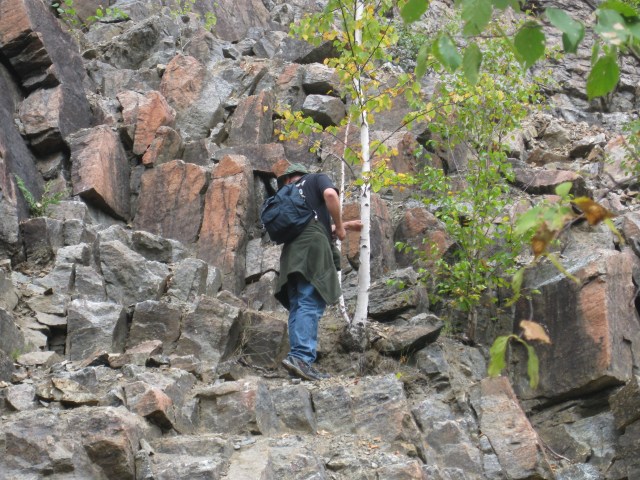 Some parts of the writing experience never change – particularly for writers trying to break in to the world of traditional publishing. This post is a recycled, updated old post that is as true today as it was the first time it was posted….
Whether you’re fifteen or fifty, when you finally decide that you must put pen to paper, you begin an arduous climb up what often is an unforgiving mountain. I think if you knew in advance what it would be like, you might consider aborting. But if you’ve ever climbed a challenging peak you know that there are many points along the way where you think you are almost there. That belief pushes you onward. You see that crest just up there where the trees are thinning and you think, “I can do this.” The surge of adrenalin at the thought of achieving your goal moves you forward and upward, only to reach that crest and see that the mountaintop still soars high above. That experience repeats itself until, at last, you think that you can’t handle one more disappointment, can’t push one more time. But then finally there it is – the treeless summit that can’t possibly be the kind of mirage you’ve been dealing with all along. It has to be the top. You’ve done it! Then you exhaustedly haul yourself up over those final rocks to the highest point, look around, and see that you are surrounded by higher mountains which block the view you had anticipated for so long. Discouraged and seemingly defeated, you collapse on a rock smoothed by eons of winds and weather. You open your pack and pull out refreshing water and an energy bar or bag of trail mix. Breathing in the fresh, crisp air, you close your eyes. The refreshment of the snack and water begins to do its job. You look down and see that even in this hostile environment, tiny creatures live and rugged plants grow. Reaching this summit, you realize, is no small feat. You can appreciate that. But there are those other, taller mountains out there. What is the view like from those? As you make your descent, you’re already planning what you need to do to conquer one of those other mountains. You don’t know, at that point, that there are more mountains on the other side of those mountains.
Many a writer gets discouraged and gives up. Another climb, another struggle, another disappointment just isn’t worth it. There are other pleasures in life.
But not you. No matter how tired you get or how late in the day it is, you always seem to have more water and trail mix you pull out and devour, feeding your body and energizing your soul, preparing you for the next surge.
My guess is I don’t need to make the direct connection for most aspiring authors between climbing the mountain(s) and achieving your writing goals. But I’ll do it for non-writers who might not understand what most writers go through before they make a name for themselves. I’ll abbreviate it in recognition of the potential boredom factor.
The first mountain you climb is little more than a hill, but it doesn’t feel that way when you’re starting out. It’s disciplining yourself to write regularly and actually finish something. It’s overcoming any insecurity you feel about the quality of your writing and getting the story or essay or poem or whatever onto the paper and taking it to The End. Edits and rewrites follow, of course, but that’s really the descent from the first mountaintop. You’ve finished something and you’re beginning to think about the next climb – getting it published.
After all the rewriting you’ve done, you’re pretty pleased with what you’ve written. You’ve done enough reading about getting published to know you need a good query letter. That letter is your ticket to getting an agent or publisher to say yes, they’d like to see your work. Failing that, you’ll paper your walls with rejections. And note well, “failure” is not just defined as not writing an effective query letter. It’s also the result of not knowing exactly what it is the agents or publishers are looking for at the time of your submission. Lots of homework required there, and even that might not give you enough to avoid the canned response: “Sorry, not quite right for us at this time.”
First you send your query to places that allow multiple submissions. It’s a time-saver, after all. You know that it may take weeks – maybe even months – to receive a response. (And these days some agents don’t respond at all if they aren’t interested.) One by one the impersonal responses trickle in, with the occasional carrot like “Great writing, but we just took on a similar work.” It’s those carrots that keep you from getting completely discouraged. Surely, if a New York City agent or publisher says “great writing” your work will be picked up by someone.
There are exceptions, of course. You read sometimes in Writers Digest about a new author who was accepted by an agent on the first query and went on to a six-figure advance and/or a multi-book contract. But make no mistake, this is rare.
Months, or more likely years, after starting your search for an agent or publisher you may (or may not) finally receive a positive response. Up to this point, many writers have begun to consider self-publishing. That “great writing” message way back when pushes us forward. Surely, if you can bypass the bureaucracy of the formal publishing world and get your book into the hands of readers, they’ll appreciate what you’ve written, right?
Ah, yet another mountain.
(To be continued…)
There are various approaches to converting your Word document to one that can be uploaded to Amazon. Unfortunately, some can be embarrassing disasters. Read Jane Friedman’s suggestions for a successful conversion:
When you are unhappy with the progression of your story’s plot, it may be the problem lies with your characters. Read Jane Friedman’s blog to learn more:
There is no such thing as perfect pitch to agents and editors at a conference. But with careful preparation, you can minimize your anxiety and maximize your chances of a positive outcome. Jane Friedman tells you how:

I unplugged this week. And now I feel like I just returned from an expensive spa!
We have had this week’s vacation planned since – well, since we signed up for our little cottage last year around this time.
Usually, on vacation, I load every electronic device I own along with our usual luggage. In years past, I have found vacations to be my most productive writing time. But for some reason, last year and this, I’ve been dismally unproductive. As I analyzed why that was, I studied my behavior on the vacation week we took in June. What I discovered should have been predictable, but took me by surprise.
Every time I turned my computer on to write in the wee hours of the morning when no one else was awake, I took a “quick look” at what emails and social media posts I’d missed since the previous morning. Next thing I knew, the world around me was wide awake and all I had done was respond to what I found on line.
Result: absolutely no writing emerged from my right brain or my computer. I came away from vacations feeling like a dismal failure.
Heading into this more recent vacation week, I had just completed a block of 10,000 words for my new novel. I decided to take a PLANNED break both from writing and my obsession with emails and social media. I arrived at this morning feeling refreshed and not the least bit guilty about the near-total detachment from obligations of both the writing and on-line variety.
Of course, I had to spend much of today catching up, especially on emails, since that’s where I get most of my bill-paying reminders.
But now, bills paid and email box delightfully empty, I’m looking forward to diving into a day of productive writing when the birds wake me up tomorrow morning!
Lesson learned: unplugging and just going with the flow is both refreshing and good for the soul.
Try it!








Recipes showing step by step directions with pictures and a printable recipe card.
Greater New York Armenians community and events
AlanaKalanian.com
Louise Mabey
No one ever reads the same book. We all react to the written word differently. The following are my opinions regarding the books I have read.
All Things New England
Meandering Across China & East Asia
Writing, Publishing, and Marketing Ideas
Observation, Humor, Opinion
Writing One Page at a Time
Thoughts Indulge ( My best thoughts got personified )
Separating authors from the herd and giving them one-on-one time with readers.
Relationship Author and Coach
... a little mixed up
Photography, Birds and Travel
Pull up a chair, and I'll tell you a story...
picture book writing and life as a memoirist
For lovers of reading, crime writing, crime fiction
Fitted Storytelling from Edward Roads
 JUST WRITE IT!