Kirkus Review for Autumn Colors

Just had to brag a little. When Autumn Colors was published, my dream was to have a review by the likes of Kirkus or Publishers Weekly. I sent copies to them last fall, but never heard anything.

Until today!

The following review was sent to me for preview and will be posted on the Kirkus site soon!

“When a woman learns that a family friend has died, her return to her hometown for the funeral reopens wounds from years before—will she ever be free of the ghosts from her past and truly enjoy her present?

Hearing of Mrs. Crandall’s passing, Kerry Waite heads back to her old stomping ground, leaving husband Charles behind. At the funeral, she reflects on her life with and without Mrs. Crandall’s son Tom, the boy she loved and lost. Lajeunesse’s novel takes readers back and forth between the funeral and Kerry’s past, as she ponders the events that brought her to this place in time. Within her family, Kerry has experienced firsthand how marriage can stifle a woman’s individuality and sense of place in the world. She is determined to remain independent, even putting off the advances of the boy she has loved since she was in middle school. When that romance is cut short after she finally opens her heart, Kerry is left with an emotional void she believes can never be filled. Charles is determined to find a place in Kerry’s life, but she’s not sure that it’s possible. This is a heartwarming tale, flawed as it may be. The protagonist is often difficult to understand and empathize with. Tom and Charles are genuinely nice guys, so her feelings for the two are expected. However, it’s unclear why they are so fond of her, as she spends most of her time refusing to open her heart and pushing both men away. Lajeunesse tells the story via individual vignettes, and these snapshots make the book a compelling read. While Kerry might not be the most accessible individual, her friends are worth getting to know. This is a solid portrait of a middle-class baby boomer in turmoil.

The men in Kerry’s life try to break down her barriers, a journey which can be trying for readers but is ultimately worth experiencing”

It’s a thrill that I had to share.

Posted in Autumn Colors, Book Reviews, Publishing | Tagged , , , | Leave a comment

INSPIRATION COMES IN MANY FORMS

The year was 2002. It was significant in a number of ways. My husband, Dennis, retired from his career of over three decades. We were building our dream retirement home, a log house on water in the Adirondacks.

It also brought the thirtieth anniversary of the accidental death, in 1972, of my then fiancé – a life-altering event for me. And I was five years past my personal vow to turn my experience of his death into a story about loss and grief – and the sometimes aberrant ways we deal with them. And about why it’s so important to let the important people in our lives know that we care about and love them – because in the blink of an eye that opportunity could be lost forever.

I had started the story so many times. I could still recall, vividly and viscerally, my feelings on that October day and the days that followed. I could re-live the gut-wrenching ache and emptiness. And the anger – at him, at God, at anyone who wasn’t at that moment living with that unbearable pain. The disbelief that I’d never see him again. The thrill when a car pulled up in front of our house, because surely it was him and all this had been but a horrible nightmare.

But I seemed incapable of putting the words to the page in any way that would matter to anyone besides me.

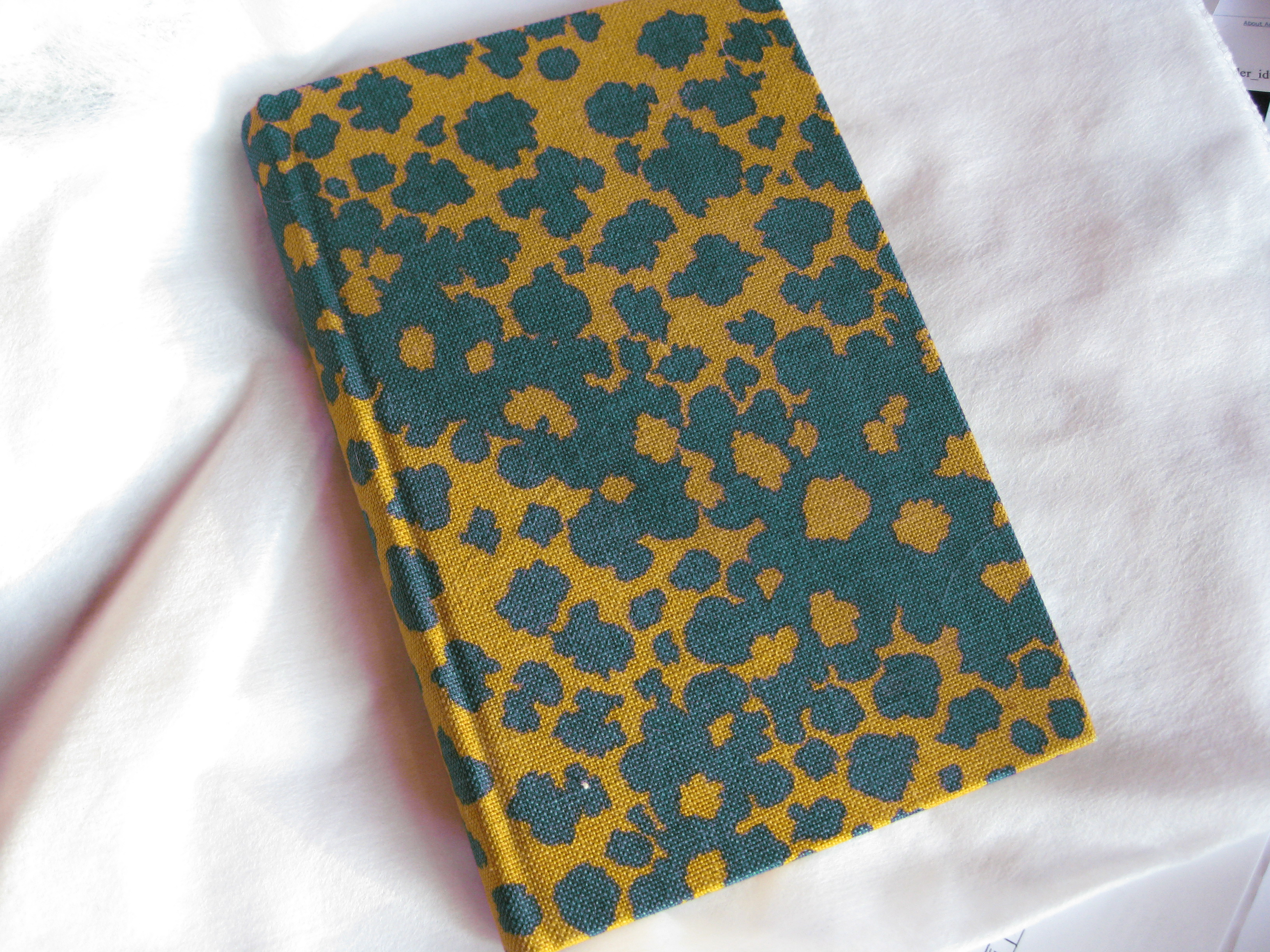
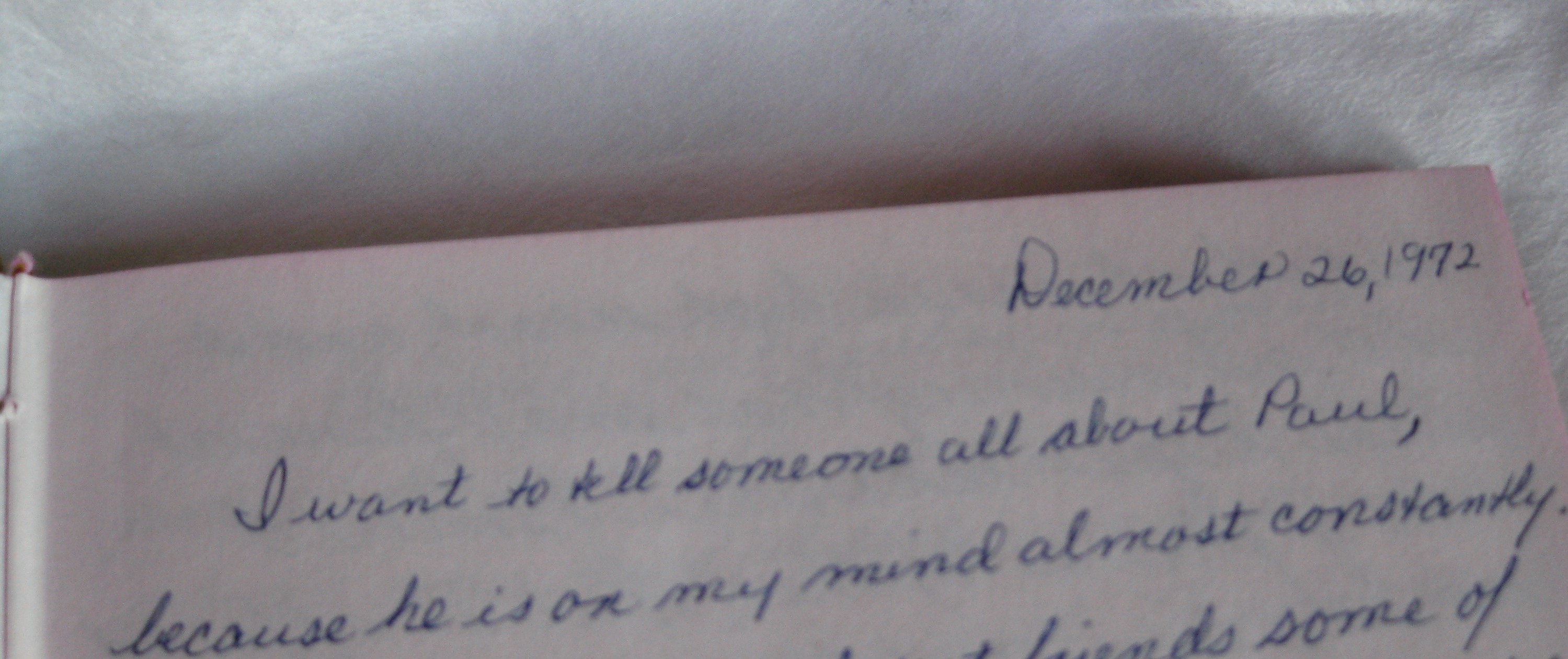
As the year progressed, and we prepared for our imminent move from our home for the past twenty-five years, we began sorting through boxes and drawers, deciding what to keep and what to toss. It was then that I unearthed my “Paul box,” the box that contained the bits and pieces of our time together and the things we’d shared – the album I created of my memories and emotions, photos, music of that time. And the forgotten journal.

Two months after Paul died, I started writing everything I could remember about him, about our first encounter, about our time together. I think I was afraid, even after such a short time, that those memories would be lost to me over time. And that would be like his dying all over again or – worse – like he had just been a fleeting soul on this earth to begin with.

Finding that journal, with its raw pain mixed with joyful memories, was the catalyst for finding my voice for Autumn Colors.

Posted in Uncategorized | Tagged , , , , | Leave a comment

Drive and Desire – Essential To Publishing Success

Drive and desire are two words that can be either nouns or verbs. Both are critical to fulfilling the dream to be a published novelist, particularly when you have neither fame nor connections to make you attractive to the publishing world. And they are equally important for the “average Joe” who maintains a day job to pay the bills while waiting (hoping) for writing to pay off.

The odds are against success for most wannabe writers, especially if your definition of success is acceptance of a novel by a major publisher – with an advance large enough to demonstrate the publisher is invested in the book’s success.

Most major publishing houses will not consider unagented submissions. The successful agents are the gatekeepers of access to major publishers, screening out all but the highest quality manuscripts. So unless you have a famous name, you have to win over an agent’s enthusiastic support for your book first. And that’s a daunting task. I recently heard an agent say that on average about 10% of query letters to agents result in requests for manuscripts or parts of manuscripts. Of those manuscripts that are submitted, fewer than 10% result in an offer of representation by the agent. That’s one in one hundred, and the agent still has to sell the book to a publisher, an outcome that isn’t guaranteed.

Still, just to get as far as securing representation, the book (particularly of a new/unknown writer) has to excel, to stand out in the crowd. So you never, ever send a manuscript that is just “good enough” – that is, one that you know needs more work. A writer recently remarked to me that is wasn’t worth the effort to perfect a manuscript because inevitably the agent and/or eventual editor is going to want changes. Did that statement make a clanging bell go off for you? It should.

The painful truth is, if the manuscript you submit to an agent isn’t the absolute best it can be, you can count on falling into the ninety percent of writers whose work is rejected. There just is too much competition for “good enough.” Neither agents nor editors have time to help you rework your manuscript into marketable form – and why should they when there are writers out there with the drive and desire to polish their manuscript to a high sheen before submitting to agents? A catchy query might get your foot in the door, but a well-written manuscript with great characterization, a page turning story line and the right amount of tension in all the right places is what will get you that positive response from an agent. Well – assuming you did your homework, and the agent handles the kind of book you’re submitting. And assuming he/she didn’t just pick up a writer whose manuscript has enough similarities that would put it in direct competition with yours.

So yes, there’s an element of luck and timing involved also.

 If you are really committed to your goal of seeing your novel published by a major publisher, you have to challenge every excuse you make for putting off writing. My life is busier now than it’s ever been, between a full time job, a three-hour round trip driven commute, training for long distance running (marathons and half marathons), knitting an average of two complicated sweaters per year, ordinary household chores, and fitting in some quality time with my husband and dog (not always in that order, I’m embarrassed to admit). But unlike as recently as ten years ago – when competing obligations won out over writing time – now writing-related activities (including studying and taking webinars and courses, researching agents, attending conferences in addition to writing and revising) have risen closer to the top of my priorities. It’s even won higher priority in my budget, allowing course, conference, editing and other expenses.

Only you can decide whether you have enough drive and desire to pursue success in writing, to make time for it in your life no matter what.

 My debut novel, Autumn Colors, was published first by a small, traditional publisher. When it went out of print, I self-published it, because I was not successful in finding representation. Had I known then what I know now, things might have been different. I’ve learned a lot by immersing myself in the world of writing and being open to what others, particularly experts in the field, can teach me. I have a better feel for what works, for what agents and editors want. And I won’t be sending the manuscript for my second book anywhere until I am one hundred percent certain that it meets the industry’s high bar. It’s become a bit of an obsession, and is taking longer than I’d hoped.

 Disappointments abound. And obstacles are many. But aren’t they just more reasons why drive and desire are so key?

Posted in Uncategorized | Tagged , , , , , , | Leave a comment

The Mother-Daughter Relationship Challenge

On Sunday we will be paying tribute to the mothers in our lives – and perhaps remembering those who are no longer with us. The mother-daughter relationship often is fraught with conflict. The teen or adult daughters tend to blame the mothers for being unsupportive or not understanding them, an attitude that often is in direct conflict with the daughter’s love and desire to be close to her mother. The mother may be frustrated by the daughter’s distance or what seems to be an unwillingness to see her as a whole person, not just a mom. It’s much more complicated than that, of course – entire books have been written about it. But with rare exceptions, mothers aspire to be a good mom, to raise her children to be solid citizens with the skills they need to make their way in the world. Daughters, having come along only after the mother has experienced many years of life that molded her and her concept of parenthood, have a disconnect with the whole person behind the mother role.

In AUTUMN COLORS, the relationship between Kerry and her mom was strained at best, particularly in her younger years. It was only with a lifetime of experience that Kerry began to understand her mother’s needs, and by then it was too late to change the difficult connection. Here is a scene from AUTUMN COLORS that reflected Kerry’s mom’s fragile emotional state and Kerry’s difficulty understanding it at the time:

****

Kerry sighed. Her mother was long gone, but how often had she wished she could do their relationship over? Why did daughters so rarely appreciate their mothers’ strengths until it was too late? And why did some daughters never get past the adolescent rebel-against-your-mother-and everything-she-stands-for stage?

Kerry and her mother weren’t the best of friends. She saw the woman as unreasonable and old fashioned and neurotic. Her mother said she was slothful and mouthy, dressed in unflattering clothes, wore too much makeup, and spent too much time watching garbage on TV. And that was on a good day. She fueled the fire by sleeping late, wearing jeans that looked painted on her, surrounding her eyes with thick shadow and black eyeliner, and watching anything her mother disliked. They only had one TV, so if she was watching All in the Family and her mother wanted to watch an Englebert Humperdink special, a battle was inevitable. She secretly liked Englebert, but she couldn’t afford to admit that to anyone, especially her mother.
Her mother was almost always in a bad mood, or sleeping to escape one. And she could be counted on to ruin every special occasion. Like holidays. Kerry cringed as one Thanksgiving came to mind. The day started out fine. Mom decorated and pulled out the good china, and made Kerry polish the silver. Karl and Keith never had to do anything, because they were boys. She hated being the only girl in the family.
“Times are changing,” Kerry remembered saying to her mother. “Boys should learn to help around the house. Girls don’t have to be their slaves anymore.”
Her mother had given Kerry her famous glare.
“Better get over your high ideas, Miss Big Shot. This—,” she had waved her arms across the stacked china and the preparations for the dinner, “-is your future.”
Now, that was an inviting aspiration.
“It’s not my future,” she had declared. “I’m not going to be tied to a kitchen and screaming babies.” And mouthy teenagers, she had also thought, a little sheepishly. “You’ve certainly made that seem unappealing.”
For a moment, as her mother’s face slackened and her shoulders dropped, Kerry thought tears would follow. She felt guilty until her mother had glared at her again.
“You think you’re so smart,” she had said, her voice icy and tight, the paring knife she was using on the potatoes punching the air, adding exclamation points to each word. Then she had thrown the knife into the sink, tore off her apron and went upstairs to her room. Again. That wasn’t the first holiday she had abandoned them, and it wouldn’t be the last.
Kerry had churned the conversation over and over in her head as she continued preparing that holiday meal. What could she have done differently? They had all sat down to a holiday feast, sans mother, and no one discussed what happened.
Kerry sighed. Like the proverbial elephant in the living room, no one ever addressed the holiday flare-ups. She wasn’t always the trigger. Anyone or anything could set her mother off unpredictably, and she’d disappear for the rest of the day. No one would try to talk to her. No one would acknowledge that she wasn’t at the table. Kerry would get stuck with the clean-up, too. Part of her always wondered if it was all by design. After all, her mother didn’t have to prepare the meal or clean up afterward.
But the unhappy woman didn’t enjoy the holiday, either.

****

It’s the time of the year when we celebrate mothers and motherhood. No matter what your relationship with your mother, it’s important to remember that her life didn’t begin the day you were born. She brought her own life history, joys and heartaches, and parental/family influences into her role as your mother, with all the associated positives and negatives. Next time you want to lash out at your mom, first take a step back and try to understand where she might be coming from. Likewise, as you interact with your own children (present or future), let your wisdom and understanding of how your own past is coming into play temper your reactions and expectations.

And above all, let your mother (and your children) know the love you feel for them. A time will come when you will never have the opportunity again.

Posted in Uncategorized | Tagged , , , | Leave a comment

Peer Review for Improving Writing

A few postings ago I asked if anyone was interested in being involved in an on-line peer review group. I wasn’t inundated with takers – only one – but it’s hard to know if that was due to lack of interest or lack of readers of my blog. It occurred to me that I haven’t done much in a long time to bring people to my blog – and, in fact, have not had an active blog to drive anyone to!  My bad!

The one person who was interested agreed that even if it’s only two of us, we could start small and see if we gain momentum along the way. That seemed like a great idea. She said she was busy with other commitments at the moment but would send me a piece of her work for critique soon.  I will post at least part of that (depending on how much she sends) for open input.

Meanwhile, I sent her 6 chapters of my new novel-in-progress, Sentimental Journey.  It’s too long to post in full, but I will share the first 10 pages here.  It’s already been reviewed professionally for grammar, so my hope is to get feedback on a higher level. What works for you? What doesn’t? Would these first ten pages make you want to continue reading the book? If you skimmed the first few pages in a bookstore, would you be compelled to buy it?

Here goes:

SENTIMENTAL JOURNEY

By Dawn Lajeunesse

Chapter One

Meredith Fields had the perfect life. She lived in a large, center hall colonial in a coveted suburban development with her handsome, successful husband, two children – Michael and Betz – and two dogs adopted from the shelter. She boasted an accomplished career as a romance author. She volunteered at a nearby wildlife refuge and was certified as a wildlife rehabilitator. Daily workouts kept her body and mind in shape as she aged. She had her hair done monthly by the most expensive shop in the area – the one who did all the local newscasters – and her nails every two weeks. Life was good, right?

And then it all went into free fall.

It didn’t happen all at once. Rather, pieces began to erode and crumble, until one day the bottom fell out. And she wasn’t entirely unhappy about it. 

She stared at the blank screen. The cursor blinked, mocking her. The computer’s digital clock silently moved forward, 11:05, 11:06, 11:07. The outline for her new novel was several weeks overdue. Her stomach clenched – frustration, fear, and vague annoyance. Annoyance at what? Or whom? She wasn’t sure. Perhaps at having to create on a deadline – again. Still. That nagging sense of unease. What was it?

“Meredith, what’s going on? It’s not like you to be late.” Phil Jackson, her agent, said from her speaker phone. Discussions with Phil rarely were short, and she found it tiresome to hold the receiver to her ear. “At least tell me what your general idea is and when you’ll get it to me.”

She sighed. Looked down to see her fists were clenched. Took a deep breath and consciously relaxed her hands, her body.

“You know I don’t like to share my story lines until I’ve worked them out in more detail. I could change the whole theme by the time I get to the end of the plan. Characters could disappear…or take over, changing the story completely.”

Silence from the speaker, other than what sounded like some background paper shuffling.

“I’ll have the complete outline to you next week,” she said finally, always the first to end a silence.

“What day next week? And don’t tell me Friday. I’m under the gun too, you know.”

Today was what? Monday? No, Tuesday. If she worked through the weekend she could have it to him Monday. No, make that Tuesday to allow for the unexpected.

“I’ll email it to you on Tuesday, Phil. I should be able to pull it together and finalize a couple of question marks by then.”

A couple of question marks? More like a couple dozen. Maybe a couple hundred. The truth was she didn’t even have an idea to develop. For the first time in her industrious writing career, she was blocked.

Truth be told, she was tired of her usual genre. Romance sold well, but after nine in as many years the plots all sounded the same to her. She was bored. She felt like she had to keep all her old outlines around her when she worked, not so she could copy from them, but so she could avoid repeating names, settings…situations. Basically they all were the same. Same formula. Same ending. Different people, different details, but otherwise, same.

The problem was she couldn’t come up with a better idea. And even if she came up with something totally different, Phil would get nervous because it wasn’t her “sure thing.” Her novels sold well. They’d never win a Pulitzer, but they brought in a comfortable, steady income. For her and for Phil. He wouldn’t want her to risk that security.

And still the cursor blinked.

She looked around the room, as if she could draw some ideas from the walls or the furnishings. That wasn’t likely. Her home seemed as boring as her genre. The room décor was plain, untouched from her mauve period, with mauve mini-blinds on the windows, hardwood floor with a couple of faded mauve and blue scatter rugs. The walls were a creamy color and needed to be repainted. She eyed the telltale marks where furniture had scraped along the wall the last time she got restless and moved things around. The scar in the woodwork. The dent from the doorknob from when Betz, her fifteen-year-old daughter, was much younger and used to blast into the room when she came home from school. The discount store framed prints of flowers that fit the color scheme. Stark, simple, practical furnishings – a blond wood table for a desk, a plain tan metal file cabinet, a couple of bookcases filled with paperbacks and hardcovers she couldn’t bear to throw away. The nicest piece was the old rocker she had taken from her mother’s house after the nursing home placement. Now that she thought about it, there was nothing creatively stimulating about the room. Maybe she needed to work someplace different, to shake things up a bit.

Sighing, she pulled up the list of ideas she’d generated a couple of months ago when she started working on book number ten, thinking back then that the deadline was a month away and she had plenty of time. She scanned the list, much of which consisted only of key words. Most she couldn’t connect with a larger idea after all this time.

Damn! When did everything about her life fall into such a rut? She used to enjoy creating the fantasy lives of romance novels. She took pride in her home and family. They used to do so much together. Vacations in the Adirondacks and the Maine coast. Sunday dinners – home or out, they were part of a comfortable routine. When did they stop? Family projects – when did they start farming everything out to contractors? They were hard work but gave a sense of accomplishment and togetherness. Like the night sky in Betz’s room. She’d had such a fascination with the constellations after they visited the planetarium in New York City. They spent weeks planning it and an entire weekend creating it. They’d all felt so connected. Michael wasn’t there, of course. That was his first year of college. Hard to believe it was five years ago.

She sighed. Michael had drifted so far from the family. She knew it was expected. They’d raised their children to be independent, so his creating his own separate life was a good thing, right? It wasn’t that he just didn’t want to be around his family. At least, she preferred to believe that.

Still, she missed those simpler days.

Of course, they didn’t seem simple at the time. Juggling two children of such different ages, eight years apart. Two careers. And her obsession with maintaining a perfectly ordered home. That came from her own mother, along with her belief that whatever she did wasn’t quite good enough. Meredith wasn’t as good a cook as her mother. But why would she expect to be? Her mother had run a restaurant almost single-handedly from when her father had died, when Meredith was just two.

Goodness, her mind was all over the place. Everywhere but where it should be, developing a plan for her next novel. She debated making a cup of tea before getting back to it.

Keith entered silently. Her back was to the door, but she smelled him before he spoke. Lately he’d been wearing way too much aftershave. It was overpowering. She should tell him that, but he could be so sensitive, always complaining she was too critical.

“Hi,” he said, barely peeking his head around the door. “Am I interrupting?”

Of course you’re interrupting.

Biting her tongue, realizing she was on edge, and it wasn’t fair to take it out on him, she sighed and turned to face her husband of almost twenty-five years. They’d be celebrating their silver anniversary in a few months. So far they had no plans for the occasion.

His good looks hadn’t faded with age. Other than a few streaks of gray and the inevitable lines around his eyes, there was little about his appearance that admitted to his fifty-five years. He ran his fingers through thick dark hair lightly streaked with gray and averted his deep-set brown eyes.

“I’m just trying to meet a deadline,” she answered more pleasantly than she felt. Smiling and motioning to the rocker she added, “You’re home early. Home for lunch? What’s up?”

He folded his six-foot frame into the low seat of the rocker. He looked at the ceiling, over toward the door, down to the dark, hardwood floor. He made no eye contact. “Uh….” He rocked, and his eyes made their rounds again.

“Crash the car again?” she asked, trying to inject a little humor.

“No, nothing like that.” His crooked grin used to make her melt.

“Then how bad can it be?” What little patience she had was trickling away. The deadline loomed, with so much to complete.

He bolted from the chair and began to pace.

She resented having to look up at him. It made her neck hurt.

“There’s no easy way to do this.” He stopped abruptly in front of her. “I want a divorce.”

She had written stories like this. Her heroines usually cried or got angry. Once she had the protagonist pounding her fists against the husband’s chest. Sometimes she’d dissolve, collapse so the husband had to catch her before she fell to the floor, followed by hysterical tears. There was the nausea. Or just a knot in the stomach that tightened to excruciating pain.

Funny, she felt none of these.

She nodded. “Go on,” she said calmly, manicured hands folded on her brown wool slacks with the perfect crease. There was always more to these stories.

“There’s not much else to say,” he said, hands out, palms up, as if to say “that’s all there is,” like people did with a dog who couldn’t have any more treats. “All gone, Ruff!”

But he sat on the rocker again. Rocked. The chair half on and half off the throw rug made a sound that reminded her of the metronome that used to pace her playing on the piano many years ago. The tock of an old clock: Tick-tock. Tock. Tock.

“I’m in love with someone else,” he stated simply.

That pulled her thoughts back from the metronome era. 

“Anyone I know?” 

He smiled blissfully, as if picturing her in his mind. 

“Caitlin. Of course, she can’t continue to be my assistant once we go public with our relationship.”

Somewhere deep inside Meredith, an irrational giggle was rattling around, trying to get out. Nerves. Or shock. Or…something like that.

“She’s a child!” She struggled to give this discussion the serious attention it merited. “Barely older than Michael.” She shook her head, amazed both at him and at her own reaction – or non-reaction – to his announcement. “You’re a cliché, Keith.”

“It’s not like that,” he objected, leaning forward. “We really connect –.”

“Oh, I have no doubt you connect,” she interrupted, warming to the challenge of this conversation. The giggle leaked out.

“Don’t be crude, Meredith. We have something very special, very deep. Really.”

She bit her lip to hold back another snide remark.

“You’re taking this very well,” he noted, surprise in his voice.

She caught his eyes directly for the first time.

“I’m not taking it at all, Keith,” she growled. “I wasn’t prepared for this, and I can’t absorb it. A few minutes ago I was thinking about our twenty-fifth anniversary, and what we might like to do to celebrate. Guess nothing, huh?”

He cringed at that reminder. He probably hadn’t thought about it, so caught up as he was with little Caitlin.

“I’m sure this will hit me after it sinks in.” It would hit her, wouldn’t it? She’d never pictured herself as a divorcee. It wasn’t part of her vision of the future. Their relationship hadn’t been passionate for some time, but it was comfortable. That’s the way all relationships evolve, right? And that’s not a bad thing. Comfortable is good. No surprises. Until now. But so far she felt nothing. Well, not really nothing. What did she feel? Why was it so hard to admit to relief? But why was she relieved? She didn’t want to be alone in life. But . . . she pulled herself back to Keith, who wasn’t looking nearly as contrite as he should. “When are you leaving?”

“Well, I wasn’t planning to leave until we’re divorced, when I can marry Caitlin.”

“I don’t think so.” She grinned again. It probably looked slightly maniacal to Keith.

“Huh?” Amazingly, he looked puzzled.

“You don’t want to be married to me, so you’re out of here. Preferably tonight.”

“But I don’t have a place yet. You can’t just throw me out.”

“I can’t? You’re throwing me away. Which is worse?”

“Come on, Meredith, be reasonable.”

“I think I’m more than reasonable. I haven’t made an emotional scene. I haven’t been violent. I’m simply telling you go connect with your little Caitlin. Would you like me to help you pack?”

“Caitlin’s apartment is too small for two people.”

“Why do I assume the two of you have already spent a lot of time there together?”

“I can’t just move in with her. It wouldn’t look right.”

“You’re kidding, right?” When his blank look told her he probably wasn’t, she continued. “Dear, dear.” She made clucking noises, shaking her head. “Don’t you think you should have planned this a little better? You can’t expect to live here and sleep with little Caitlin.”

“Please stop calling her that.” His voice tightened like it did whenever he was trying to control his anger.

“Fine. You can move your stuff into the back bedroom until the end of the week. Then you’re out of here. Now if you’ll excuse me, I have a deadline to meet.” She turned back to the computer and pretended to work while she waited for him to leave. When he didn’t move, she looked over her shoulder. “Close the door on your way out,” she told him.

When the door clicked behind her at last, she looked around with a sigh. Usually by this time of day random and disorganized piles of printed pages and handwritten notes surrounded her on the desk and floor. When she was producing something. But today, nothing. She was disappointed not so much because of her looming deadline right now, but because she had a powerful urge to organize. Sort the notes into categorized neat piles. Examine the printed pages and throw out what wasn’t useful, put the rest in some order, ready to be re-read tomorrow. She always did that, printing out the pages she produced, letting them sit overnight, and looking at them critically the next day. But today there was nothing but her list of keywords and the accusing cursor on the blank screen page.

Frustrated, she blew out a disgusted breath and bolted from her seat, startling Muff and Kipper, the two mixed breed dogs she’d rescued from the shelter. They hadn’t budged, not even looked up, during Keith’s visit. She smoothed her slacks and tugged the tweed sweater around her lean body.

“It’s not like I’ve let myself go,” she muttered, flashes of workouts and light suppers fast-forwarding in her head. “Of course Caitlin’s body is tighter than mine. When you’re in your twenties, that’s a given even without effort. She does have that perky, cute wrinkle-free face. How can I compete against that? She’s not the brightest, but I doubt her brain is what appeals to Keith. What more could I have done?” Then, realizing she was a cliché, too, blaming herself for Keith’s infidelity, she retrieved a can of Pledge and a roll of paper towels from the bottom drawer of her file cabinet. If she couldn’t organize notes, she could clean. Muff and Kipper whined at the closed door until she set them free. They ran down the hall to the relative tranquility of Betz’s room.

“I definitely don’t need this now,” she fumed. “It’s not bad enough that my mother’s on her way out, in a nursing home…, exactly what she never wanted. Have to get her house cleared out and ready to sell. Can’t get any ideas flowing for my next book. Phil on my back about that. Geez, now I’m talking to myself.”

Within minutes every wood surface in the room was dust free, and an orange essence filled the air. She tossed the roll of paper towels and Pledge into the drawer and shoved it shut, grimacing at the crash, then reopened the drawer and closed it again properly, as she would have made one of her kids do if they slammed something in a fit of temper.

Leaving her office, she flew down the stairs and into the dining room where she retrieved another can of Pledge, paper towels, and a bottle of Windex from a drawer in the corner hutch. A similar triad of cleaning supplies was sequestered somewhere in every room of the house except fifteen year old Betz’s room, where her compulsive cleaning was not welcome.

Betz. How would she take Keith’s news? She adored her father. And generally had him wrapped around her pinky. Good grief, this family was full of clichés.

Meredith caught a quick look at herself in the mirror over the serving table as she swirled from surface to surface, spraying, wiping, polishing, recalling the white tornado Mr. Clean ads of her youth. She raised the Pledge can over her head and spun an extra couple of circles just because she felt like it.

*******

Have at it, readers!

Posted in Uncategorized | Tagged , , , , | 1 Comment

Mature Woman’s Perspective on Pitch Slams

I spent the past two days at the Writers Digest Annual Conference in NYC. It made me feel I’m starting my writing career about 30 years too late. Lots of young, hopeful aspiring writers. I’m not completely sure what turned me off the most, but the “pitch slam” certainly played a role.

A “Pitch Slam” is like speed dating with agents. You really need to have a thick skin, because you only get a max of 3 minutes with each agent, and if he/she isn’t wowed by you in the first minute or so, you may be summarily dismissed. I maintained a 50% batting average pitching SENTIMENTAL JOURNEY (book #2). What that statement doesn’t tell you is that due to long lines for the agents I wanted to see, and a time constraint of a train to catch, I only spoke with two agents.

Imagine 400 people herded into a hotel ballroom with 50+ agents at tables around the perimeter. Aspiring authors lined up at their chosen agents – with many lines as long as 25 people snaked in and around the lines of adjacent agents who may have had 5-10 people in line at a time. You got 3 minutes with an agent before someone rang a cowbell and yelled for you to move on. Once at a table, because of the many surrounding conversations both at adjacent tables and people talking in the lines, the agent had to ask you to repeat yourself and you frequently had to do the same. The background noise was deafening, even after I adjuestd my hearing aids.

The two agents that topped my list had cancelled (both older, very experienced agents), but there were up to 10 others I hoped to pitch to, carefully selected for the types of writing they represent.. I was motivated by the first agent I spoke with, who immediately asked me for the first 50 pages of SENTIMENTAL JOURNEY. I then stood in line for my next agent selection for 15 minutes, only to be told before I even got my whole pitch out that it “wasn’t doing it for” her – in other words, move on even before the cowbell rings. The scenario’s not anxiety-producing enough – it has to also be dismissive!

I stood in the next line for over 20 minutes with five people still ahead of me and began asking myself why I, a woman old enough to be most of these kids’ grandmother, was demeaning myself like this. Yes, I’d like an agent, because without an agent I’ll have no chance at a large publishing house. But really, I’ve been a successful career woman for forty years. I expect to grovel a bit when trying to carve out a niche in a new career, especially fiction – hard to break into for anyone – but to me this whole scenario is such a power play. If you’re at all nervous and can’t get your pitch out smoothly, you get the hook. Or even (as in my case) if you manage to say what you wanted to say – or at least started to – an agent can decide they don’t like your look or your hair (or your age?) and not even give you enough time to say what your book is about, let alone critique your pitch, as we were told they would do.

Earlier in the day I’d chatted with a woman at one of the many sessions who had decided against the pitch slam in favor of waiting for another conference where she could make appointments ahead of time for fifteen minutes with up to ten agents. You send thirty pages of your work to the agent in advance and get to discuss its strengths and weaknesses (and potential for the agent’s interest) privately. So much more civilized  and productive than the chaos of the pitch slam.

Back in line in the ballroom I overheard a man saying to a line neighbor, “How can something so stressful be so much fun?” There’s an adrenalin junkie or two in every crowd. But clearly there were others in the ballroom with me who didn’t see it as I did. For the record, he was young – thirtyish, I’d say.

I looked at my watch and saw that if I stayed in that line it was the last one I’d have time for before running to catch my train. I said, “what’s the point?” I smiled at the man behind me and said “I’m outta here.” I figure I already had a 50% success rate, and it wasn’t likely to get better. I went downstairs and retrieved my checked bag, put on my coat and boots, and started walking toward Penn Station. A few blocks away, I was so frustrated with the crowds and hustlers (my tolerance was diminished by the chaos I’d left), I dropped down into the nearest subway entrance and bid farewell to Times Square and writers’ conferences.

I had spent the previous 24 hours listening to mostly self-important people who reminded me of some of my college professors (not the ones I’d liked) rambling pompously, many selling a product or service, going from one session to the next where I heard the exact opposite of what the previous speaker had said. There were exceptions – there was one very funny agent who spoke and who would be dynamite to have as an agent – unfortunately her focus was crime novels. One of the agents who cancelled out on the pitch had a presentation impressive enough to make me buy his book, although I question now if I should have wasted my money. Conferences are the key places to land an agent, and getting one by mail or email is much less likely. Without an agent, my book will go nowhere and I’m not self publishing (although that was the push at the conference – like, why bother even trying for Random House, just do it yourself). So I may just be going back to knitting my way through my winters.

Maybe I’m just too old to start over in such a competitive field.

But then, maybe I’m just too damn stubborn to give up yet. I’ll see what happens with the agent who asked for 50 pages, which I sent off this morning. I’ll keep trying the old-fashioned route to get an agent, at least for a while. But I won’t quit my day job or plan how to spend an advance any time soon.

Posted in Uncategorized | Tagged , , , , | 3 Comments

THE UNIVERSE GIVES US WHAT WE NEED, NOT WHAT WE WANT

As I’ve indicated in some prior entries, achieving success with a first novel when you don’t have a major publisher and/or you aren’t a celebrity is, to say the least, a challenge.  I’ve had more doors slammed in my face (figuratively) than a door-to-door encyclopedia salesman. (Do they still exist? Does anyone sell anything door to door anymore?).  I always considered myself too sensitive for sales. I back down easily, and I take rejection personally. But I’m surprised at how resilient I’ve become. I don’t believe that’s entirely by my own doing. It’s at least in part to the various kinds of support I’ve received from friends, family, and – most of all – satisfied readers! And a few surprises.

Since I received no comments on my suggestion for an on-line peer review/critique process, I have to assume that either the folks who would be interested don’t read my blog, or that it’s just not a popular idea. That’s okay – I’m actually a little relieved, because it could have been a monumental responsibility to do it right.

So I moved on to focus on other activities. I’ve set up a few local events. I received a wonderful press release suggestion from my friend Carol Constantino, so I sent a new round out to area newspapers about a week ago. I received a couple of form responses requesting additional information, but no real action yet.  And a dear friend in Virginia has arranged for some face-to-face events in her area, which I’ll be doing in late February.

I continue to encounter obstacles and disappointments. My official book release date was last Friday, January 7th. That was the day my book was to be available on Amazon and through bookstores.  Imagine my angst when I signed on to Amazon that morning and searched my book, only to receive the message that there were no results for my search. I’ll never know whose error it was – the publisher says they submitted the right information and that Amazon made the mistake. But it was resubmitted and yet as of today, no listing. I had to pull back and revise all of the release day on-line activities I had ready to launch. I hardly slept all weekend, I felt so angry and powerless.

But most of this week I have received one message after another that has helped me look at things differently.

First, I had sent out a revised mass email (without the Amazon connection), and received so very many notes from people who had already read AUTUMN COLORS and loved it. And no, they weren’t all friends and family! Many friends and family had loaned their books to others, or raved about it enough to encourage their friends to buy it. And so many of the messages were from people whom I’ve never met. That urged me on. Surely if people love the book, and say they couldn’t put it down, it’s worth continuing to push, right?

And in the midst of my doldrums I received a note from a friend, coach and mentor, Judy Torel. She said: “My advice to you for helping yourself through frustration and impatience is to adopt the view that everything is temporary so no pain/frustration lasts forever…..and trust that when things don’t go the way you would ideally want them to that this is the universe’s way of helping you to get out of your own way…..and trusting that the opportunities that will come out of the way it is will be ones you would never have seen if it went ‘your’ way.  The way things are is always the way things should be….because that is how they are….it is the way we ‘think’ they should be that was wrong…..not vice versa.  Which is a completely different way of looking at the world ……but one that is totally less stressful and more joy filled and peaceful!” It took a few days for it to gel in my own non-eastern-thinking brain, but I think I’m almost there.

And then yesterday, as I was packing away returned “Advance Reading” copies of the book and muttering about the celebs who don’t even have the courtesy to reply to my requests for blurbs with a refusal, or the one that took money for a donation to a charity and never supplied the blurb, and my husband handed me the mail. It was yet another returned book – one that I had sent out last August – from Hayley Mills’ personal assistant. Yes, it was a refusal, but it was a personalized refusal:

“Hayley Mills thanks you for your letter requesting an article about AUTUMN COLORS. She has only just returned to London having been filming in South Africa for several months. Therefore there is not the time to write an article for the book. She wishes you luck with the book.”

No, that didn’t help my promotion, but it did help my mood. And my willingness to persevere.

And then today, along with some very kind and enthusiastic comments responding to a Facebook status update I placed early this morning, I received a note from my dear friend, Nancy Gaston, who has done much to help me identify opportunities for promotion, including linking me with book clubs in her area and providing me with contacts for media. She’s been aware of the challenges I’ve been facing, and she told me: “You have what it takes!  ….actors, musicians, etc, I believe have the same type  competition and experiences to get their foot in the doors.  Hence, this is why your publisher is not helping more with marketing of your 1st book.  They want the weak of mind to weed out themselves, so , like you said, when/if the 2nd book comes out they know who is serious about their book writing careers.”

Thank you, Nancy.

I couldn’t be more serious. I came to this commitment later in life. For whatever reason, I didn’t have the same level of drive and focus twenty years ago. I will continue doing whatever it takes to give AUTUMN COLORS a respectable run. And in the meantime I am finishing up book #2 (currently called SENTIMENTAL  JOURNEY) – only about 10,000 words away! And next weekend I will be at the 2011 Writers Digest Conference in New York City learning and practicing “pitch” for SENTIMENTAL JOURNEY.

I’m always annoyed at the saying “when life gives you lemons, make lemonade” because it’s become so cliché. But the truth is, life really does throw you a lot of curves. You have choices in how you deal with them. It’s easy to wallow in self-pity when the curve balls hurt rather than help. But that gets you nowhere. You can keep letting life knock you down until you don’t get up anymore. Or you can reach inside yourself to keep coming back. Sort of like those weighted punching clowns that keep popping up no matter how hard they’re hit. I think I’m choosing to look beyond the obvious challenges for the outcomes that may be different from my original plans but, in the long run, better. (Thanks, Judy!)

Posted in Uncategorized | Tagged , , , , , | Leave a comment

The Unknown Author and Novel Publicity

Since I have been submerged in the murky process of building a buzz for Autumn Colors – seeking reviews, sending out press releases, getting the word out on-line – I’ve begun to feel a bit like I’m sinking into quicksand. No matter what I reach for, it’s always just a bit out of range. The deeper I get, the less I can do. I’m too late for this opportunity, to early for that one, too unknown for the bulk of them. The opportunities for new novelists, particularly new novelists who are not celebrities (and not independently wealthy), to achieve any meaningful level of publicity are slim. Even the tried and true recommendation to work the local angle first has proven to offer up more dead ends than golden bridges. If I had $100 for every local and regional publication who responded to review requests with “Do you have any idea how many books come across my desk every week?” I’d have enough to hire a top level public relations and marketing firm. But no one’s handing me $100 every time they say no. 

You’ve heard of the headless horseman? I feel like the nameless novelist. 

It’s hard enough to get publicity for a non-fiction book – say, a how-to book – when you’re new on the author scene. But at least you can offer yourself up for lectures and use those events as an opportunity to sell your book. My friend Gloria, who writes historical novels, does presentations on the research process, and on aspects of the history she includes in her novels. But if you’re a contemporary romance or women’s fiction writer, as I am, what can you say that people will want to hear, and what are the chances it will create a run on Barnes & Noble or Amazon to buy your book? It’s possible, as one person suggested to me, to offer yourself to libraries and community organizations to do talks on the process of writing a novel, or options for publishing, or even running a series of classes that function as a moderated critique group. It seems unlikely that would attract large crowds (though feel free to contradict me if you disagree), and equally unlikely that all that work would lead to a surge in book sales. But I haven’t ruled it out. At the moment it would be a time challenge, especially the series of classes, because you can’t just show up there without a plan. You need to be organized and have a curriculum of sorts prepared. Even if you’re not charging, if people are coming to your program in good faith, you have an obligation to be prepared and have something worthwhile to offer them, something that fulfills the need they have that brought them to your class in the first place. And how will it all fulfill your own need to spread the word about your novel and your name? And even with that, how far reaching can you be? Most new novelists work full time jobs and some, like me, have long commutes and travel at least some of the time for work. And still have to do other forms of promotion and write book # 2. And what about family obligations? Just how thin can you spread yourself? 

Stepping stones – one activity builds on another. But at that rate any chance I’d have to build my name as a novelist would come posthumously. 

My publisher (and every other source I read about promoting books) said I should send out as many books as possible to potential reviewers – review organizations, periodicals, media, celebrities – because the return would be small, but a few really good reviews by big names could make the book’s success. I sent out well over 500 books over the last four months. I followed up on all the media and review organizations (some were nice, but most were curt and dismissive). I received some very nice notes from secretaries of a handful of celebrities and well-known authors politely declining the opportunity to read my book (but not, you should note, returning the free book). And some threatening notes from agents of another handful of celebrities warning me not to ever try to contact their clients directly. And after all that? Less than a 1% return. I obtained three reviews. 

So where is all this rambling going? I have a need to do something constructive for the novelists of publishers who don’t contribute much, if anything, to your novel’s publicity. A local blogger suggested starting a forum for peer reviews.  

I’m open to suggestions for guidelines for submission and an approval process. Remember, we want to generate respectful but honest and meaningful reviews, which in turn would generate some publicity for each book reviewed. Should we, like some reviewers, only publish positive reviews and choose not to publish a review on a book that is deemed to be poorly written? What other questions should we be asking ourselves about this process? 

But my primary question to all of you is: IS THERE ANY INTEREST IN A PEER REVIEW PROCESS FOR NOVELS PUBLISHED BY PUBLISHERS WITH SMALL PUBLICITY BUDGETS AND POSSIBLY SELF-PUBLISHED NOVELS?

Posted in Uncategorized | Tagged , , , | 1 Comment

This and that

It’s been a while! Like everyone, I’ve been caught up in the holiday activities that are piled on top of working, commuting, exercising and of course, preparing for the release of my novel, Autumn Colors, in early January.

I’ve also had occasion to visit several websites and blogs in the past month. I’m constantly amazed at how much is out there.

For fans of literary work with an independent twist, check out Wanda Shapiro’s site/blog. Wanda’s a rising star in the literary world with her first book, Sometimes That Happens with Chicken, and her cutting edge observations on the state of publishing. Check her out at www.onegirlonenovel.com.

If you are a fan of historic fiction, Gloria Waldron Hukle’s website is a must-see. Her three-novel series (might a fourth be coming soon?) follows the early Waldron family in colonial New York City and the Hudson Valley, with a foray in book #2 (Diary of a Northern Moon) all the way north to North Creek, NY. Her new article, Fact To Fiction, shares fascinating insights on how historic facts are transformed into a page-turning story. Go see her at www.authorgloriawaldronhukle.com.

Checking out my local scene, I happened upon a blog sites of a writer/reporter that I’ve found interesting.

Lori Cullen, at the Times Union (Albany, NY) website, talks books from many angles. She shares her own opinions, of course. But she’s also started an on-line book club, where participants can post impressions of the chosen book of the month. Recently featured books have included Hotel at the Corner of Bitter and Sweet, and The Girl With The Dragon Tatoo. One of the most fun and challenging activities on her site has been a challenge to any and all writers to commit to finishing their novel by year end. Sadly, I happened upon this too late to join in, as I would have loved the boost to my writing volume that a little competition would have provided. It seems to be an active and successful challenge, so maybe she’ll do it again!

And finally, I need to blow my own horn a bit. AUTUMN COLORS received a wonderfully positive review from ForeWord/Clarion this month. Here’s an excerpt:

This talented author knows how to evoke emotion, so much so that delving into her work hurts….Autumn Colors is an enlightening, though often aching, reflection on young love brought to a catastrophic end and a poignant description of spiritual healing. Expect more from this gifted writer. Rated Four Stars (out of Five). Julia Ann Carpenter, ForeWord Clarion Review.

The full review can be read at www.forewordreviews.com.

Until next time (probably after Christmas!)….

Posted in Uncategorized | 1 Comment

Scaling Author Mountain – Part Three – The Author Generation Gap

 I’m taking a little detour from writing about my own publication process to talk about a real-life marketing experience – the Chronicle Book Fair in Glens Falls, NY. 

I participated in my first book fair as the author of Autumn Colors yesterday. It was an eye-opening learning experience. Although it was mostly positive, I was disappointed that I was too busy at my table and in the panel groups I volunteered for to get around to other tables and find out what else was there. I guess that’s a good thing. 

From a distance, many of the other displays looked interesting and polished. There seemed to be a lot of children’s books, including a science based young adult book offered by my immediate neighbor. Since the book fair was held in the foothills of the Adirondack Mountains, there were a lot of locals with books about some aspect of the Adirondacks or novels based there. I’m sure there were additional interesting books and displays. 

I was glad that I’d planned ahead to have some colorful (“autumn colors”) decorations to draw eyes to the table. My neighbor with the science story hadn’t planned for much, and he had considerably less traffic. However, the woman with whom I shared the table, Gloria Waldron Hukle, a three-time novelist, had a more professional display than I did, with posters for her books (and stands to hold the posters upright) and copies of reviews and articles about her books and herself. Her stacks of both hard and soft cover books were pretty impressive. Think I’ll make some changes in my exhibit before I do another one. Gloria also let me know about a few more book fairs coming up and promised to send me notices when it’s time to sign up. She’s very generous about sharing her experience and contacts. 

Another thing I did that proved useful was to hold a raffle to give away two books. Participants had to give me their address and email so I could notify them if they won, so now I have a lot of contacts I can use for further promotion. 

As part of the “experience”, I had volunteered for one of the mini-readings and a panel about how I got published. I was glad I’d practiced (and timed) the reading, because we were limited to five minutes, and a lot of people went over that. The moderator had to cut them off, and she obviously wasn’t comfortable with that, because she did let them go over. Note to others planning to do readings: be courteous to the other authors. Pick a reading you can complete within the allotted time so everyone has equal time to do theirs. 

The panel on how I got published was the “eye opener.” There was a clear bias AGAINST traditional publishing amongst the panelists, which took me by surprise. I assume that most people would prefer to secure a traditional publisher, preferably a major one, and would resort to self-publishing only when their road to traditional publishing is blocked. Not so with these panelists! The other eye-opener was the gap between the old and the young on the panel. 

There were two men and me in my general age category (well, one was probably about 10 years younger) and a man and a woman who were probably somewhere in their thirties. The three oldsters all talked about a traditional or semi-traditional approach to publishing. A man who’d done a picture book for children called his publisher a “hybrid”, in that the publisher did some things like a traditional publisher but others more like a self-publishing arrangement. The other older man also described his experience as a cross between traditional publishing and self-publishing. And, of course, my publisher, although traditional, does not do some of the activities done by other traditional publishers, such as secure reviews of the book, and very limited other marketing. 

On the other hand, the two younger authors were adamant about not wanting the traditional publisher approach. They wanted to retain full rights over their work, which you lose for the period of your contract with a traditional publisher. The young woman said her novel was literary, and she expected that it would appeal to a more sophisticated reader. The young man was by far the most interesting to me, both for the topic of his books, the Abanakee language, and for his use of something called Lulu, which I hadn’t heard of before yesterday, but was mentioned by at least 3 people. I haven’t investigated yet, but it seems to be a print-on-demand service, and was praised by those who spoke of it. It certainly helps limit the outlay for large print runs, which can be very costly, and that makes sense particularly for such specialized books as one about the Abanakees. But it seems to me it also limits your reach, if you’ve written something more mainstream, or even for a literary novel. 

The two younger folks also, although they spoke with disdain about Facebook and Twitter, both agreed they were essential to promotion, and seemed to have a good handle on using them effectively. Two out of three of us older folks were not on Facebook (I am), and I haven’t yet checked out their presence on Twitter. 

And the young authors also made it clear that electronic books were the future and old-fashioned hard and soft cover books will go the way of eight-track tapes. I can’t imagine a world without “real” books – books that can be signed by the author and lovingly stored on bookshelves after reading. I can’t imagine libraries with only downloadable e-books instead of shelves and shelves of well-worn books. I certainly can see an advantage to a Kindle or similar device for going on vacation, so you can have several books with you without taking up precious weight and space. And e-books are less expensive in the long run, after you’ve made up the cost of whatever reader device you purchase. But there’s just something satisfying about holding a real book in your hands and turning the pages and marking your place with a bookmark or scrap of paper or whatever’s handy. Perhaps turning on a Kindle is just as satisfying for some. But what would childhood be without picture books? Do illustrations and photos even translate to e-books? Admittedly, I’m showing my lack of experience with them, not to mention my lack of interest. And maybe my age.

I tend to “think young” – or so I thought – but this was the first time I felt a significant generation gap related to writing and publishing. There was a clear line between the thinking of the young and the approach and hopes of us older authors.

Posted in Uncategorized | Tagged , , , , , | Leave a comment