We all do a certain amount of skimming across blog sites and internet sites – who has time (or reads fast enough) to read every site you hit on? That said, it is important, as a blogger, to make sure your post title is not misleading in any way. A misleading title could result in a reader’s disappointment (if the topic proved to be different from the title’s expectation) or someone passing the article by (because the title implied a topic in which they had no interest.)
As I was perusing blog sites, I came across this title. I was about to move on, because I have less than NO interest in zombies and vampires. But, by chance, some words at the beginning of the post caught my eye and I read on. As a former public health nurse with decades in the public health field, I was impressed by the concise summary of how to protect yourself in the event of a growing pandemic. If it’s not Zika, one is bound to arise in the coming decades, so it is critical information for everyone. But I almost trashed it.
Bob Mayer, the author, also has written The Green Beret Survival Guide. I haven’t read it, but I’m guessing it expands on the blog post. I assume the dramatic subtitle that included zombies had the same intent as the title of the post — but I probably wouldn’t have considered reading it just based on title, because I wouldn’t have taken it seriously.
The takeaway message for me was the importance of carefully titling and describing both blog posts and books, since someone skimming through the overcrowded inventory of stuff to read or buy on the internet could be swayed, positively or negatively, to investigate what you have written (and maybe buy your book).
All I can say is…WOW! I had no idea there are actually some decent dollars available through Amazon if you get your book into one of the leading positions.
This is for all of the writers out there who sometimes feel like a snowflake in a blizzard of books all vying for attention (and dollars) of the buying public. Last year, former journalist Darrell Laurent started a blog specifically to help writers get the word out about their books. Each week he features two books, and authors who provide profile information (quite extensive) are listed with links to who they are and what their writing is about. The link to his blog is https://snowflakesarise.wordpress.com/about/. I encourage you to check it out, to take advantage of the opportunity, and to view information about some phenomenal books and authors.
Bob Mayer’s keys to unforgettable characters is an excellent reminder of some things we writers take for granted (but don’t always apply), along with a few refreshing insights!
Greetings from frigid upstate New York! This weekend we are anticipating Minus 40 degrees with wind chill!
The Good News: I guess you might say I’ve learned something about my lifestyle over the past six weeks.
The Bad News: I haven’t met my 3500 words/week goal. Well, at least not 3500/week on Gram & Me.
When you set a writing goal, you should specify what project(s) you will be working on that count in your goal. And think about how much time those other projects eat up.
I’ve probably managed to write 3500 words/week. But when I set the goal, I was thinking specifically of a timetable for completion of Gram & Me. I hadn’t thought about the other kinds of writing I do and how much time I spend on them.
I’ve been paying attention since I set the goal. Here are my excuses and I’m sticking with them. I manage the web page for my high school class, and with a major reunion coming up (okay, true confessions—it’s the 50th), there’s been a lot of activity there. And over the past month, I’ve taken two online courses, one requiring considerable writing, and the other a combination of writing and time, including the Blogging 101 course that has resulted, happily, in a bit of transformation of this site.
So I haven’t been lying on the couch in my jammies, eating bon-bons and watching Hallmark movie marathons. But technically, I haven’t met my goal. So, just for my internal and public record, my writing goal allows for any written words, but I’m still focused on getting Gram & Me completed by early spring!
Some of you have asked what I meant by the Oreo method of critique last post. It goes by several names and here is the method I use when I give critiques. And it is the method I like used on me when I receive critiques.
I’ve heard the Oreo method given different names. This has also been called the Hamburger technique. As you read you will see why.
We all need encouragement in our writing. Critique can help or hinder us. Feedback need not be toxic and can do a lot towards getting our writing to shine. Some of us are afraid of getting and giving critiques. However if you do the Oreo Method of giving them, you are bound to be a valuable player in your critique group. Here is the method.
One- Give a general statement of praise. Find something you really liked about the…
Winning the attention of a well-connected agent and major publisher—AND having your novel viewed by the publisher as worthy of considerable investment—isn’t just about writing a good story. That’s part of it (unless you are a celebrity, which automatically propels you to the top of the pile).
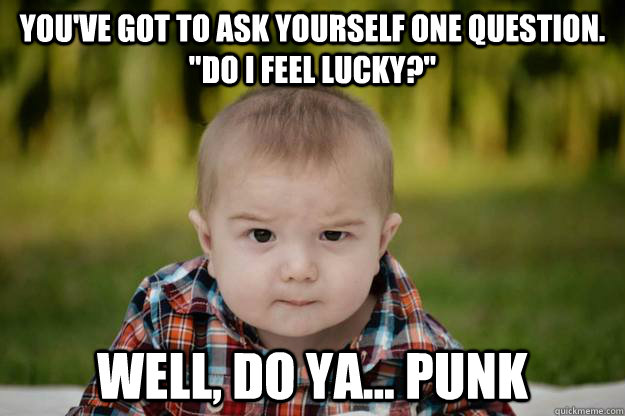
A part of getting noticed—I can’t quote a specific percentage, but it’s not insignificant—is luck. Luck that you’ve hit the agent with just the right material at just the right time. Luck that your query and/or manuscript makes it past the guard at the door, often an agency intern. Luck that you’ve used the right keyword in your query to motivate the intern or agent to read past the first paragraph.
You can increase your “lucky day” odds by researching the agents you are targeting. Beyond the obvious, i.e. do they represent your genre, look at their subtler preferences. Eliminate those who are less likely to be moved by your pitch and pay attention to what they say is important to them in a query. That may mean fifty variations on a query theme targeting fifty different agents. But, hey, just how badly do you want to see your “lucky day?”
Okay, so beyond pure luck, what might improve your odds? There are the basics: following the submission guidelines including for format. And don’t waste precious query space trying to be cutesy or raving about friends and family saying your novel was the best book they ever read. But beyond the most targeted query possible for each agent, your novel must grab the agent from the first page, render him/her incapable of putting it down, and do that with a clean, thoroughly edited manuscript.
Nothing says sloppy amateur like a manuscript-long series of misplaced commas, run-on sentences (unless used sparingly for specific effect), misuse or overuse of colons and semi-colons, and demonstrating overall lousy grasp of basic sentence structure. These issues jolt the reader out of the story.
And it is such a simple fix! Yes, you can pay a professional editor (as I do and recommend). But nearly everyone knows one or more grammar and punctuation freaks who might be willing to copyedit your novel for the price of a mention in the acknowledgements and a free copy of your published book.
What about the “render him/her incapable of putting” your book down? Ah, that’s the writer’s real challenge. And it’s hard to self-assess, because the writer is too close to his own writing to be objective. Again, you can pay a professional to critique your novel from this perspective. It is not cheap! And you should target professionals with searchable connections to agents and the publishing world.
But say you are an impoverished student or anyone whose budget precludes laying out that kind of money. Then look around you. Do you have friends or colleagues who are avid readers AND never shy about expressing opinions? Can you convince any of them that you won’t be offended if their comments aren’t glowing? Otherwise they won’t be honest. Look at it this way—every negative opinion they express and you edit accordingly leaves one less excuse for an agent or editor to reject your book.
Granted, I’m not an industry expert. But I’ve papered entire rooms with rejection letters for my first two novels…
which I ultimately self-published. I’ve learned along the way what doesn’t work. And I’ve taken enough webinars and on-line courses and read enough books by industry experts to be better educated about what does work
This time, with Gram & Me, I am doing everything possible to improve my odds, trying to ensure all that remains is luck. And hoping that…

 When you set a writing goal, you should specify what project(s) you will be working on that count in your goal. And think about how much time those other projects eat up.












 JUST WRITE IT!