REVISITING THE CLASSICS FOR INSIGHTS AND INSPIRATION

Some of you may recall a recent post of mine when I described my experience with a scathing critique of my newly completed novel. And actually deep-sixed the novel since it seemed unredeemable, based on the extent of the criticisms. Part of the recommendation was that I return to the fundamentals of story development. This, of course, insulted me, since I’ve completed two well-reviewed novels. I spent a few weeks licking my wounds and deciding what to do next.

I decided to open my mind to some of what the critique recommended, if for no other reason than to prove her wrong. (Yes, that’s a bad attitude.)

I’ve since been doing some remedial reading on the basics of novel construction. And there are (eureka!) some things I could do better. A writing instructor once had recommended that I return to the classics to observe how the great writers open their stories, hook the reader, and keep them hooked. I started with Ernest Hemingway (A Farewell to Arms). And then, with all the hype about Harper Lee releasing a new novel after over sixty years, I decided it was time to re-read To Kill A Mockingbird, which I’d last read in high school – nearly fifty years ago.

All I can say is “wow!”

Bells rang. Lights flashed on and off. In just the first chapter I “got” the whole thing about starting the real action and introducing all or most of the primary characters right in the first few pages. And keeping the tension high, ratcheting it up and pulling back a little, but never letting it drop to ground level. Clearly defining what the story was about, the main character’s goals, who plays critical roles in the main character’s life. What the main character’s challenges are. How the characters fit in each other’s lives. And so on.

I used to think it was impossible to cram all of that into the first five pages. But done artfully, each piece is introduced but not detailed. Just enough to whet the reader’s appetite.

And now I’m eager to revisit the first chapter of my new book and apply this epiphany. I will continue to work on the fundamentals. But like all new or improved skills, I want to try them out, see how they fit and what needs further work as I  progress forward with Gram and Me.

Who knew acknowledging (accepting?) my weaknesses could be so uplifting?

Posted in Novel construction, Writing | Tagged , , , , | Leave a comment

THE PINTEREST PUZZLE

I was so proud of myself yesterday. As you read this, keep in mind that I am not young. Social media and all its options do not come naturally to me, as I wasn’t raised on them.

I embarked on the adventure of setting up a Pinterest account and beginning to add boards. There were steps I couldn’t figure out, like when I added pictures of dogs and puppies to my Home Décor and Mature But Not Stodgy boards and was unable to delete them. They now are in both those boards and my Love Animals board. But it seemed pretty easy to add both boards and content.

And then I hit a dead end.

I created a board for books – books I’ve written and am writing, books I’ve read, books I want to read. I merrily proceeded to my Amazon site and clicked to add both Autumn Colors and In Her Mothers Shoes. The Pinterest screen popped up and gave me my list of boards. I clicked on the books board. A check mark appeared. And lo and behold the image of Autumn Colors appeared to the left of the books board name. Success, right? Seemed that way. So I proceeded to go “window shopping” through Amazon to find books I’ve read in the past year and those I have on my wish list. Once again, I clicked on the Pinterest icon and proceeded to add them to my board via the pop-up. Twenty minutes and probably 40-50 books later I went back to my Pinterest home page to add yet another board.

But my books board was empty.

I did another test run with my two books. Back to the home page. Still empty.

I haven’t a clue what I’m doing wrong. It seemed like such a simple process when I populated my other boards yesterday. Yet my books board, perhaps the most important, remained empty. In a wave of frustration, I deleted the board.

So now I’m left with the question – what did I do wrong? What did I do different with this board from the ones I created yesterday? Seemed like a simple-stupid process, but duh, here I am.

Any ideas out there?

Posted in Books | Tagged , , , , , | Leave a comment

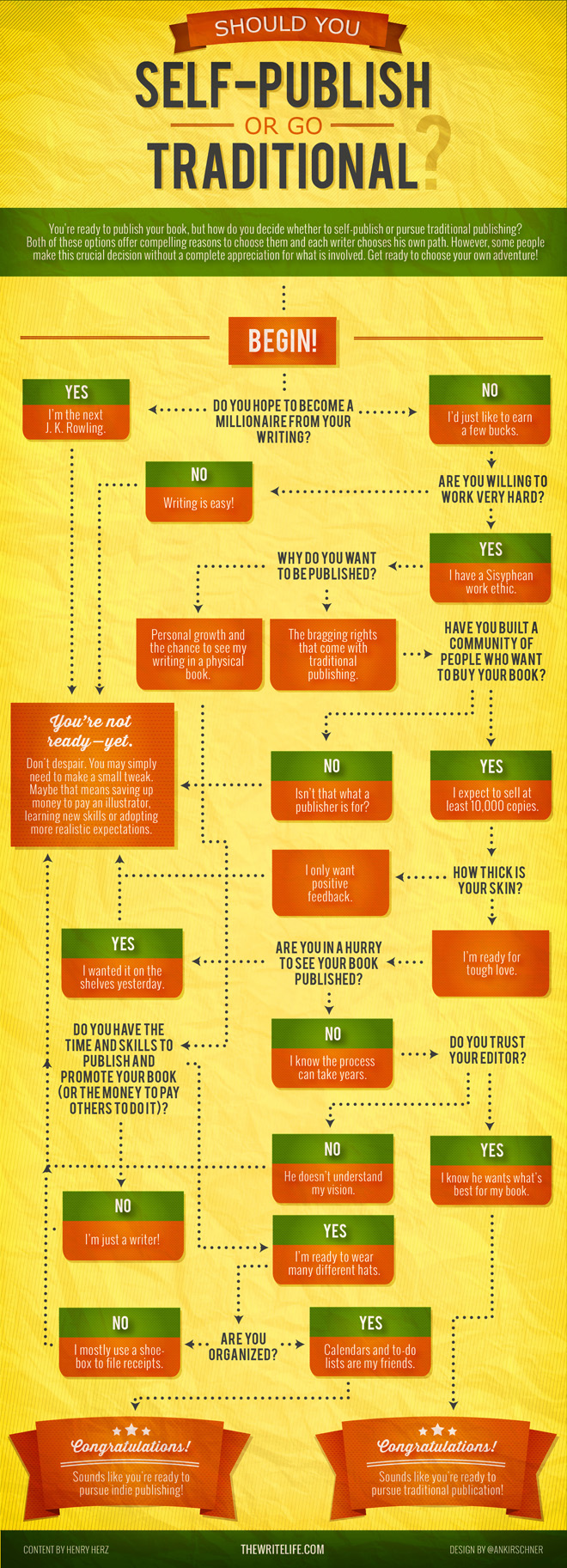
Infographically Explained: Should You Self-Publish or Go Traditional?

Here’s another take on how or why to decide to self-publish or aim for traditional…

Sherry Chen's avatarPublishing Insights

TWL-Flow-Chart-660px-5

The Write Life publishes an infographic to help authors decide whether they should pursue self-publishing or follow the path of traditional publishing.

In a discussion of this infographic, Mutterings of a Fantasy Writer refers to July 2014 Author Earnings Report which reports some statistics about “emerging trends in the world of digital publishing”

One thing that I’ve wanted to point out is that I think there is a general misconception with traditional and self publishers about “getting the book out there.” There is no “out there.” There is only “who is for” and “how is the author cultivating and adding value for readers.” People read and share information based on trust in relationships, and we should bear that in mind when we write/publish a book.

Image Credit: The Write Life

View original post

Posted in Uncategorized | Leave a comment

The Promises of Spring

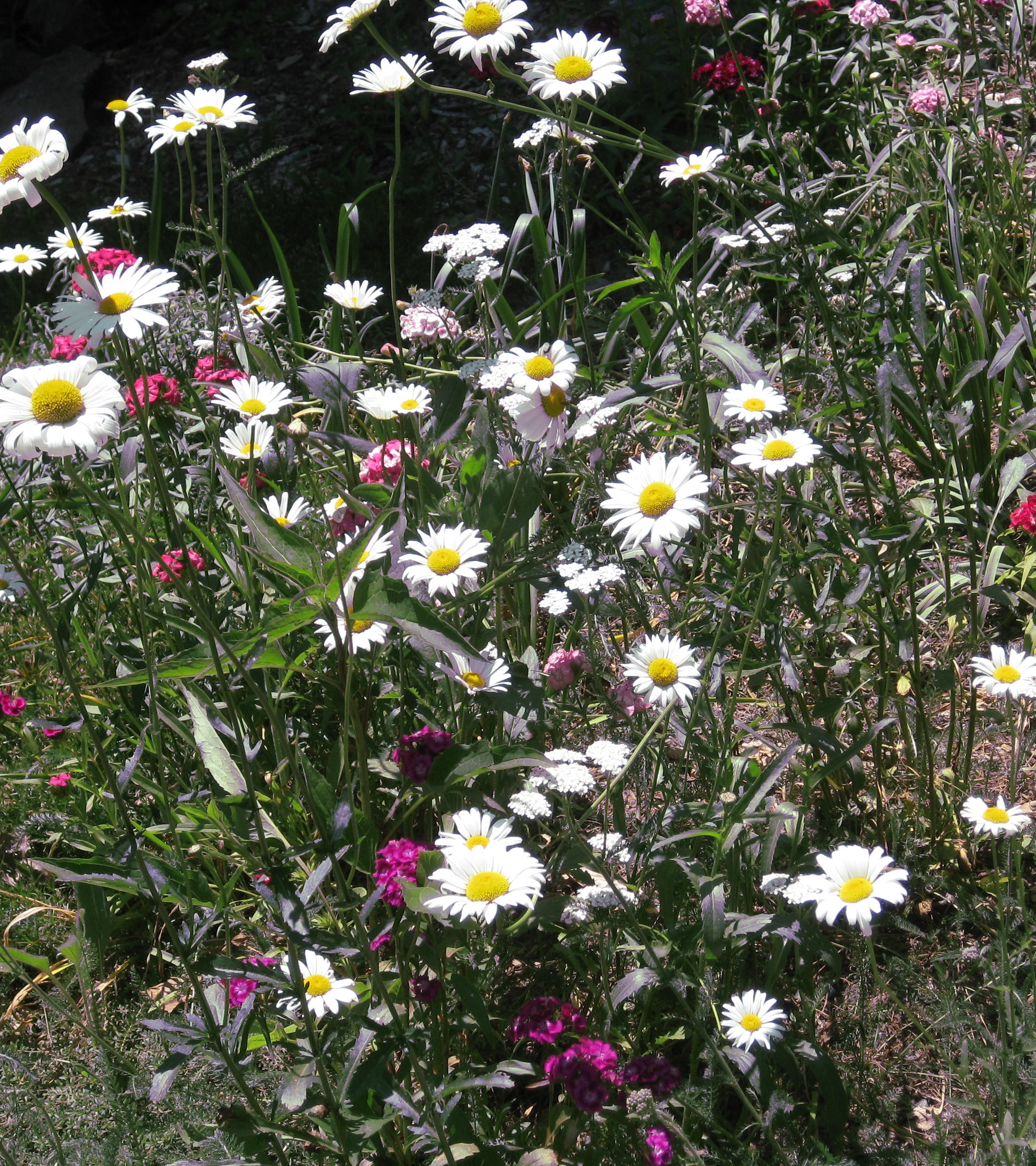
Flowers 014Butterfly         On this relatively mild, sunny March day (mid-thirties), after an obnoxiously long and brutally cold/snowy winter, I can’t stop daydreaming about flowers and butterflies and spring and the warmth of summer to come. Yes, there still are several feet of snow on the ground. But just in the past few days, the gravel of our driveway has emerged in places where inches of ice and packed snow once lived. Hope!

Yes, I should be writing. And I will get back to that when I’m done here. I’m trying something different with my new novel, Gram and Me. Usually I have a general idea for a story in my head, start writing, and just let the story tell itself. That worked with Autumn Colors and In Her Mother’s Shoes. I received lots of favorable reviews for both, and continue to sell books. But they were lacking something – that “something” that makes an agent sit up and say “I want to represent this author and her book!”

Self publishing is a wonderful opportunity for authors that was very limited and costly until the last 10-15 years. Now it is easy and relatively inexpensive, depending on the route you take, to publish your own book. But, as I’ve said in past posts, with that opportunity comes a deluge of books that are poorly edited and not very well constructed. Not all of them, by any means. But enough that there still is that belief that the author self published because their books weren’t good enough to meet the expectations of agents and traditional publishers. Some established writers have chosen to self publish after years in the traditional marketplace because, quite frankly, self-published authors can make a lot more money per book than in traditional publishing. But without a large base of fans who will buy your book – no matter where it is published – because you’ve already proven yourself to be a writer of popular, enjoyable books, the average self-published author’s books often languish on shelves, and he/she doesn’t sell enough books even to cover their own costs for publishing and marketing/promotion.

Because of this, I still feel that winning the support of an agent and a contract with a traditional publisher is the Good Housekeeping Seal of Approval on your book, at least when you are first starting out. I want that Seal of Approval.

And so, I’m approaching Gram and Me differently. I’m outlining the major plots and sub-plots first. I’m meeting and learning about my characters – what they look like, their strengths and flaws, their desires, goals and fears – before one word about them goes into the story line. I’m planning out their obstacles and challenges, their supports and friends and loved ones.

That’s not to say I might not tweak my plans as I live with the characters and they go through their story. I probably will. But I want to have a solid foundation for whatever they experience and how they deal with whatever life throws at them.

This approach may take me longer. Or maybe, after all this foreplay, the actual writing of the novel will take less time than usual. I have not idea, since I’ve not done it this way before.

But rest assured you’ll all be the first to know how I’m progressing!

Posted in Uncategorized | Tagged , , , , , , , , , , , , | Leave a comment

Socialized Media

Liked this and, as a relative newbie to active use of Twitter, appreciated Ms. LaPolla’s perspective.

SarahLaPolla's avatarSarah LaPolla

One of the most common questions I get from non-publishing friends is “Why do you have so many Twitter followers?” I get this from publishing friends too, I guess. The answer is, I don’t know. I try to be informative without being bland, and sometimes I take a break from publishing and tweet about my commute or TV shows. I have no idea which side of my Twitter personality people have responded to most, but I hope it’s a combination of the two.

I can’t really offer a guide on how to gain Twitter followers because:
1) Who am I?
2) Everyone uses Twitter differently, and I won’t assume you want to use it identically to the way I do.

Knowing how you want to use social media is probably a good first step in gaining followers. But other than that, I have no idea how to make people follow…

View original post 1,064 more words

Posted in Uncategorized | Leave a comment

WRITING DREAM COMES TRUE…BUT THE PRESSURE’S ON!

All my life I’ve dreamed of the day when I would be free to write full time. Fitting writing in around working more than full time and juggling home and family was a challenge. And more times than not, writing was assigned a lower priority. Obligations trumped desire.

When I semi-retired late in 2013,  thought for sure I’d have more than enough writing time to achieve my goals. But my part time work kept expanding, and personal obligations with elderly family members entered the picture. I did write more. But it was sporadic and disjointed, and that’s exactly how my writing read.

Fore some time now, I’ve looked forward to fall of 2015 when my contract work would end and vast expanses of time would stretch ahead of me. And then a twist of fate moved that full retirement to. . . TOMORROW!

It’s  a dream come true, right? Sure, I’m uncomfortable that inevitably there will be loose ends at work that aren’t tied up because of the abrupt ending. But all that complete and unfettered freedom! No more being tethered to my iPhone.

The pressure’s on. Since I’m blowing up Transitions (did I mention that before?) and starting fresh with Gram and Me (a women’s fiction), the timing couldn’t be better, right? I’m at once thrilled and terrified.

No more excuses!

No more excuses

Posted in Dreams, Women's Fiction, Writing | Tagged , , , | Leave a comment

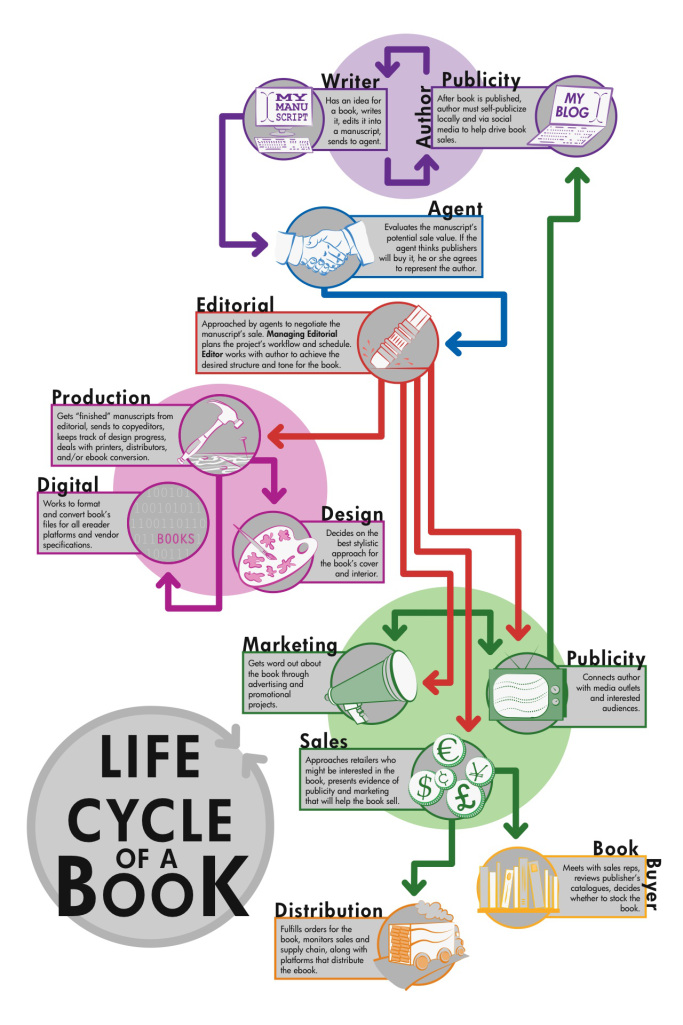
The Life Cycle of A Book

Fascinating and enlightening blog post about book publishing. Enjoy!

Sherry Chen's avatarPublishing Insights

Book-Cycle-FINAL

This picture illustrates the (traditional?) publishing process, which involves four major parties and twelve steps. If authors take the self-publishing approach, some steps (e.g. Agent) might be optional; if only e-book version is produced (whether on the author’s own website or under contract with publishing platforms like Amazon), then details of the Distribution step will also alter. In addition, the “Print on Demand” (POD) model is bound to have a great impact on the distribution process.

I personally think that these days it will be necessary to draw a direct link between “Writer” and “Book Buyer”/”Reader”. With online platforms like Goodreads, Amazon, and various blogging sites, writers and readers now can easily engage with each other in the life cycle of a book. Wouldn’t it be a great way to promote book sales if reading becomes more interactive?

Image Credict: International Book Promotion

View original post

Posted in Uncategorized | Leave a comment

RECOVERING FROM A SCATHING CRITIQUE

In my last post I talked about the value of multiple eyes on your writing. I’ve always believed in the importance of objectivity to assess a creative work, because the creator is too close to see it clearly. When I finished the first draft of Transitions, I passed copies out to friends and family to give me feedback. Most raved about how much my writing has grown. Obviously that pumped me up, and I dreamed of landing an agent and maybe even ending up on a bestseller list.

I should have had fair warning when I saw a friend over the weekend who had promised to give me an honest assessment. We were at a party, and she always managed to be in a different room. On the way home I told my husband I was pretty sure Pam hated it and thought it was really awful, because otherwise she would have mentioned the book and made at least some general remarks.

But what a reader likes is subjective. I held out for the professional critique I had paid for. It arrived earlier this week – six pages of summary notes and 350 pages of notes in the margin. In that massive volume of feedback, I found maybe one or two positive comments. The rest, essentially, said I should scrap the entire project because it wasn’t redeemable. Well, she didn’t exactly say that. But she said to throw out more than half of the manuscript and, if I really wanted to use any of it, I should turn it into a formula romance.

That line just about made me lose my breakfast. Don’t get me wrong. There’s nothing wrong with formula romances. Lots of writers make good livings writing them. But I had set out to write something bigger. My first two books had been romance/women’s fiction – not the usual formula, exactly, but that was at the core. I wanted to write something important. Something people would remember.

Clearly I failed Big Novel 101.

And speaking of 101 – she referred me to numerous books and resources to go back to square one and learn how to write a novel successfully. I’d only taken 15 years of classes in colleges and on-line, and filled my bookcases with how-to writing books. If I hadn’t “gotten” what made for a good novel by now, going back to the learning stage wasn’t going to make a difference.

My first reaction was anger. How dare she imply I lacked basic skills and where did she get off bashing the courses I’d taken. “Have any of the instructors ever written an actual novel?” That’s what she asked. I not only found it condescending, I was insulted for my past instructors – all accomplished, published novelists, some with multiple awards.

I vowed I’d never write again.

Then I slept on it and got up the next morning and started going through the detailed comments. She wasn’t kind – but then, I hadn’t paid her for false compliments. And when I looked at her comments and compared the relevant text, the novel really didn’t hold together. I had tried to do more with the novel than was realistic. I loaded it with political commentary. I sacrificed up close and personal scenes with the main characters in my attempt to write “more than just a romance.”

Seen through her eyes, I had to admit she was (mostly) right. I’m still offended by her lack of any positive comments, since I do a good job with dialogue and I personally still think I did a good job with setting some of the scenes. They were just the wrong scenes. I tried to cram so much into the story, I ended up doing a lot of summarizing – the dreaded “telling” vs “showing” that I had learned to avoid in one of my many 101 classes.

I don’t know yet where I will go from here. I’m still licking my wounds, and dread the thought of blowing up the whole story and starting over. And I still refuse to write a silly category romance with a lot of phony tension and battles between the sexes. But I did succeed in writing non-formula love stories in my first two books. I have lots of fans from those books asking me when my next book is coming out.

My husband would be thrilled if I gave up writing, as it takes me away from “us” for long periods of time. Part of me would love to just leave it behind – surely there are more productive ways I could spend my time?

But every time I think about that, it feels like an amputation. I am a writer. I’ve been a writer since I was a child when I made up stories to get my baby brother to eat his vegetables. I loved doing term papers in school. I sought out opportunities to write throughout my health care career. Removing writing from my life would be like cutting out a vital organ, or a piece of my heart.

So I need to let all this gel a bit.

This bashed manuscript was not well-conceived and really out of my comfort zone. That was part of the appeal of writing it. But it taught me a lesson. Work from your strength. Use what you do well. Maybe experiment a bit once in a while, but stay the course.

Maybe I will go back through the manuscript and see if there are parts I can use toward another women’s fiction. Ideas are already ping-ponging in my head. I’m trying to stop them because I know I should step back and take an objective assessment of what I want to do with the rest of my life. But I think I already know.

I am a writer.

Posted in Writing | Tagged , , , , | 1 Comment

THE VALUE OF MULTIPLE SETS OF EYES

No, I’m not describing a fantasy character with lots of eyes. I’m talking about the importance of having multiple people view your manuscript before you consider it ready to shop for an agent or publish it yourself.

Maybe I’m stating the obvious. But I’ve read enough books that were not properly and thoroughly edited to feel pretty certain lots of writers have either not had their manuscripts edited or were inadequately edited.

I was reminded of the importance of this recently. I just finished a new manuscript, working title Transitions. Throughout the writing of it, I’ve had it reviewed and edited by at least three sets of eyes – two professionals and one friend. So I felt pretty secure that it was clean. But I just passed it on to three additional readers, and have been amazed at what has been picked up. Some are simple typos. But in a couple of cases, it appears I was cutting and pasting phrases and apparently cut one more time than I pasted (or pasted one more time than I cut). Because in two places in the manuscript I had sentences that started and then just fell off before the thought was completed. I can’t swear that they were like that when they were edited previously. It’s possible I was making corrections and perhaps was interrupted. But it reminded me that even when I feel I have a final version, I should put the manuscript to the test of additional sets of eyes.

Why is this so important?

If you hope to land an agent, something as simple as this could be giving agents a reason to say “no thanks.” They do look for reasons to reject manuscripts, because they couldn’t possibly accept every one that crossed their desks.

But even if you are self-publishing, errors in a book can turn off a reader. It breaks the flow of their reading and jolts them out of the story. Worst case scenario, they may be jolted out and never pick up your book again, let alone recommend it (or you, the author) to others.

Although I choose to have my manuscripts edited and critiqued professionally, which can be costly, I also find it helpful to have friends who are avid readers take a crack at it. Some are reluctant to say anything negative other than, perhaps, to point out minor spelling or punctuation finds. But I do have a few friends whom I’ve convinced that they are doing me a favor to be brutally honest. And increasingly they are just that!

Self-published books, in particular, have a reputation for being “less than” the quality of traditionally published books. There are a lot of exceptions. But I would estimate that only about 10 percent of the self-published books that I’ve purchased and read (or attempted to read) were of high quality. Many of the books in the 90 percent may have had solid core stories, but the writing was such a turn-off.

Those of us who wish to raise the image of self-published books owe it to each other to make every effort to ensure that our writing is clean, grammatically correct, holds the reader, and flows smoothly, at the least. And more often than not, we are too close to our own writing to do that entirely by ourselves.

Posted in Editing, Publishing, Self Publishing, Writing | Tagged , , , | 2 Comments

THE VALUE OF MULTIPLE SETS OF EYES

No, I’m not describing a creature with lots of eyes. I’m talking about the importance of having multiple people view your manuscript before you consider it ready to shop for an agent or publish it yourself.

Maybe I’m stating the obvious. But I’ve read enough books that were not edited properly and thoroughly to feel pretty certain lots of writers have either not had their manuscripts edited or were inadequately edited.

I was reminded of the importance of this recently. I just finished a new manuscript, working title Transitions. Throughout the writing of it, I’ve had it reviewed and edited by at least three sets of eyes – two professionals and one friend. So I felt pretty secure that it was clean. But I just passed it on to three additional readers, and have been amazed at what has been picked up. Some are simple typos. But in a couple of cases, it appears I was cutting and pasting phrases and apparently cut one more time than I pasted (or pasted one more time than I cut). Because in two places in the manuscript I had sentences that started and then just fell off before the thought was completed. I can’t swear that they were like that when they were edited previously. It’s possible I was making corrections and perhaps was interrupted. But it reminded me that even when I feel I have a final version, I should put the manuscript to the test of additional sets of eyes.

Why is this so important?

If you hope to land an agent, something as simple as this could be giving agents a reason to say “no thanks.” They do look for reasons to reject manuscripts, because they couldn’t possibly accept every one that crossed their desks.

But even if you are self-publishing, errors in a book can turn off a reader. It breaks the flow of their reading and jolts them out of the story. Worst case scenario, they may be jolted out and never pick up your book again, let alone recommend it (or you, the author) to others.

Although I choose to have my manuscripts edited and critiqued professionally, which can be costly, I also find it helpful to have friends who are avid readers take a crack at it. Some are reluctant to say anything negative other than, perhaps, to point out minor spelling or punctuation finds. But I do have a few friends whom I’ve convinced that they are doing me a favor to be brutally honest. And increasingly they are just that!

Self-published books, in particular, have a reputation for being “less than” the quality of traditionally published books. There are a lot of exceptions. But I would estimate that only about 10 percent of the self-published books that I’ve purchased and read (or attempted to read) were of high quality. Many of the books in the 90 percent may have had solid core stories, but the writing was a turn-off.

Those of us who wish to raise the image of self-published books owe it to each other to make every effort to ensure that our writing is clean, grammatically correct, holds the reader, and flows smoothly, at the least. And more often than not, we are too close to our own writing to do that entirely by ourselves.

Posted in Editing, Manuscripts | Tagged , , , , , | Leave a comment